
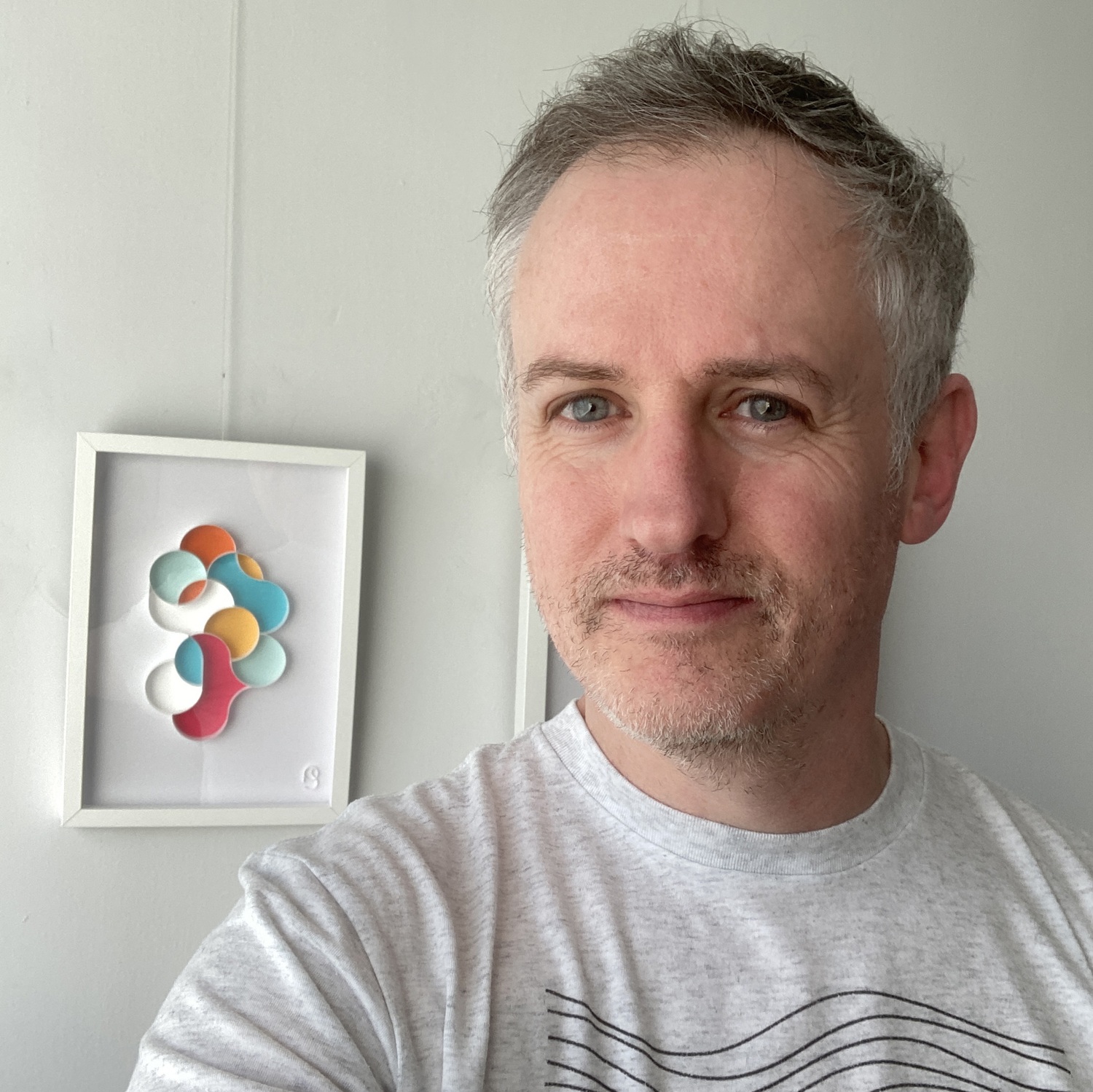
“I am fascinated with turning something that’s a flat sheet into something sculptural. There’s something a little bit magical about that.”
Artist Paul Spencer has a way of taking paper beyond its assumed limits...
by Jamillah Knowles
“I had some health issues last year, but I’m getting back on my feet again.” Paul Spencer is frank about the toll that work can take on his health and talks about this freely online with his many followers. “Too often, when I feel great, I throw myself into things and it sets me back again. I’m still learning to get the balance right and am determined to get back to full health.”
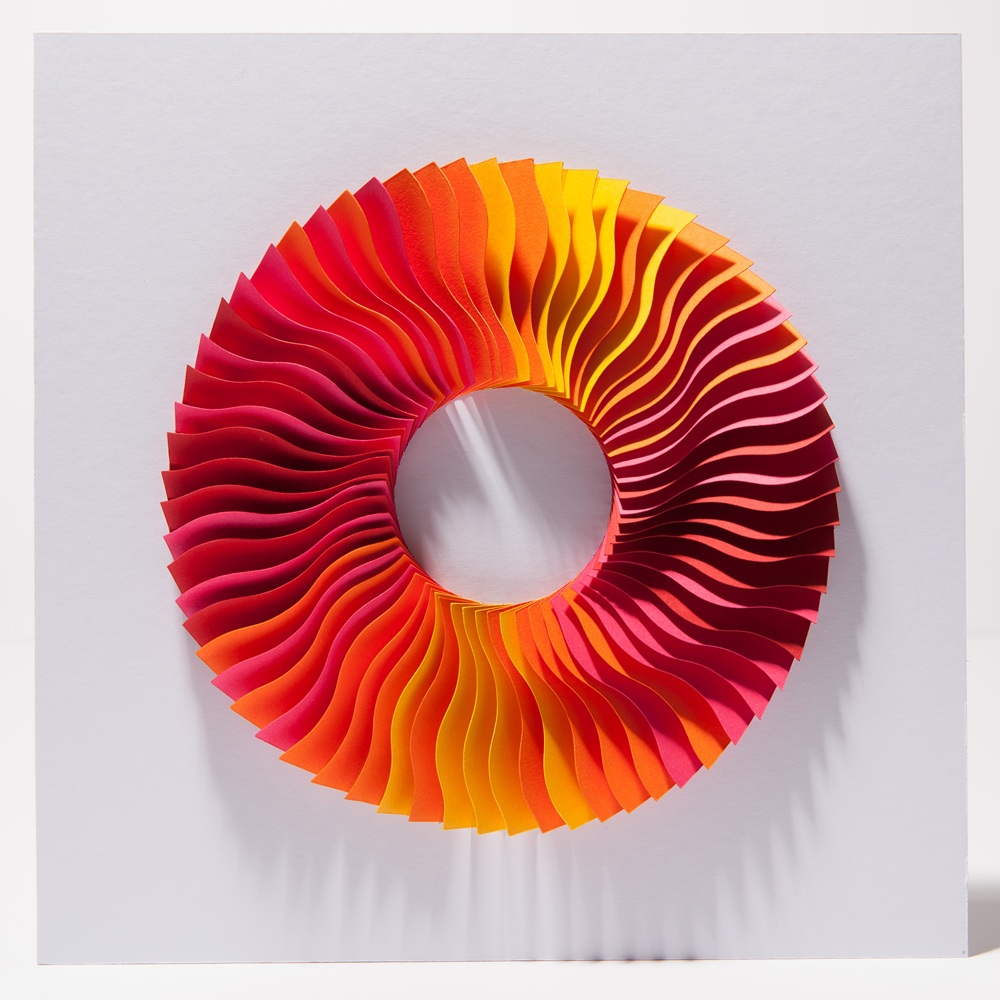
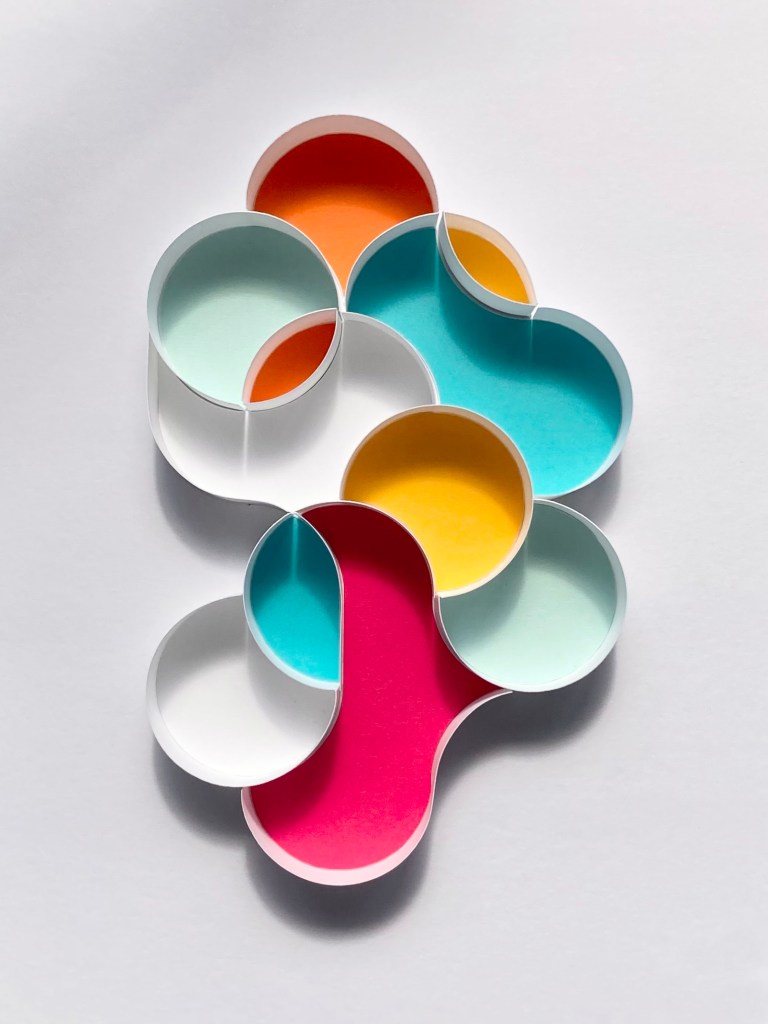
Spencer is a master craftsman of making astonishingly beautiful things emerge from paper. He creates fine geometric shapes, extracting angles and casting unexpected shadows. Whether his work is all white or in a rich array of colours, it is always exploring new boundaries and ideas.
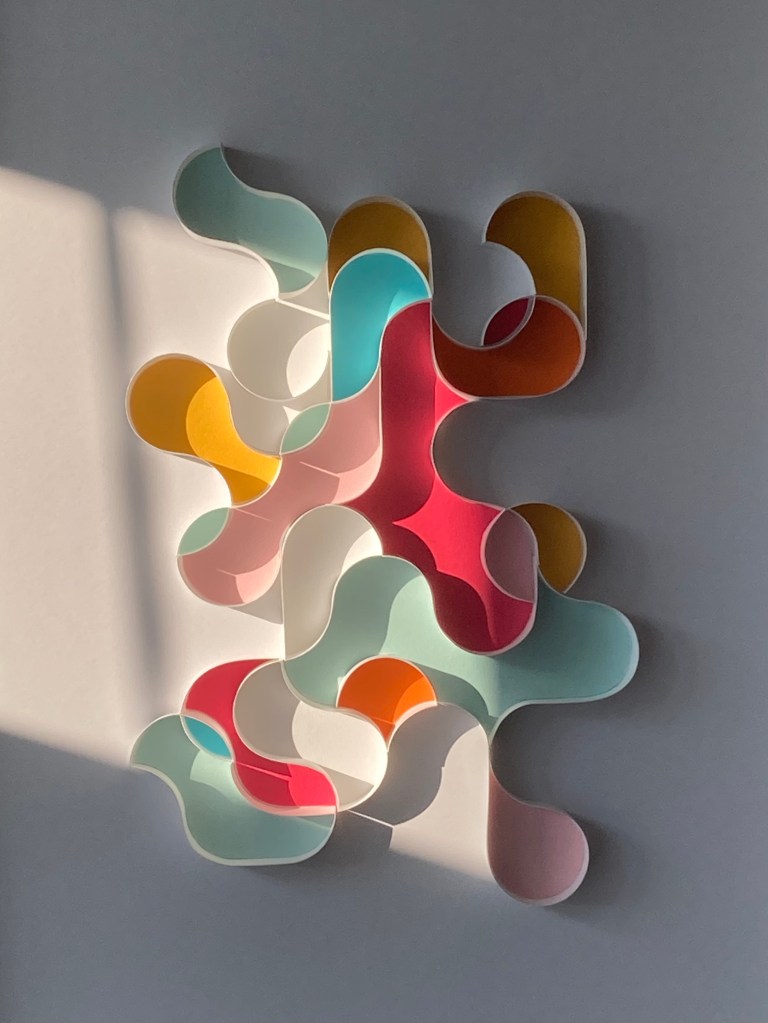
His latest series of work is called ‘Flotopia’ and it explores Spencer’s relationship with his health, energy and positivity. Affected by Chronic Fatigue Syndrome, he left a career in creative design to pursue a passion for three-dimensional work.
“In the times we are living in, I think that the things that have been going on in the world have affected me. I’m quite a sensitive person, as I think many artists are,” he says. “A lot of my previous work has just been about sculptural form and beauty – there’s nothing wrong with that – but I really wanted to put more of a message into my work and be more conscious about that.”
“The new works are about flow, good energy, shining a light for positivity and about me feeling more connected to my work. A lot of my artwork has such a high level of precision in it that I can lose connection with it sometimes. With this new series I am getting more involved with expressing my thoughts and feelings and how they manifest themselves through my art.”

Engineering roots
Exploring Spencer’s work, it comes as no surprise that he has a past as an industrial designer. There’s an extraordinary precision to the shapes and the impact they have when assembled. Along with the ability to make a two dimensional material stand out in all its delicate strength, it has honed a knowledge of the materials that has emerged through practice.
“I like paper because it’s so readily available,” he explains. “It’s not a massive expense, it’s accessible and it’s versatile. I like working with my hands and doing something tactile. With paper you can do so many things, fold it, cut it, glue it, scrunch it up, shape it and curl it. You can have an idea and just start playing with paper to see where it goes.”
“I have a really curious mind to find out what happens when I try different things. Nine times out of ten, it can be a boring result or nothing really happens, but once in a while it can be really surprising. It’s a very warm material that comes in so many varieties, textures and weights, there’s just so much you can explore.
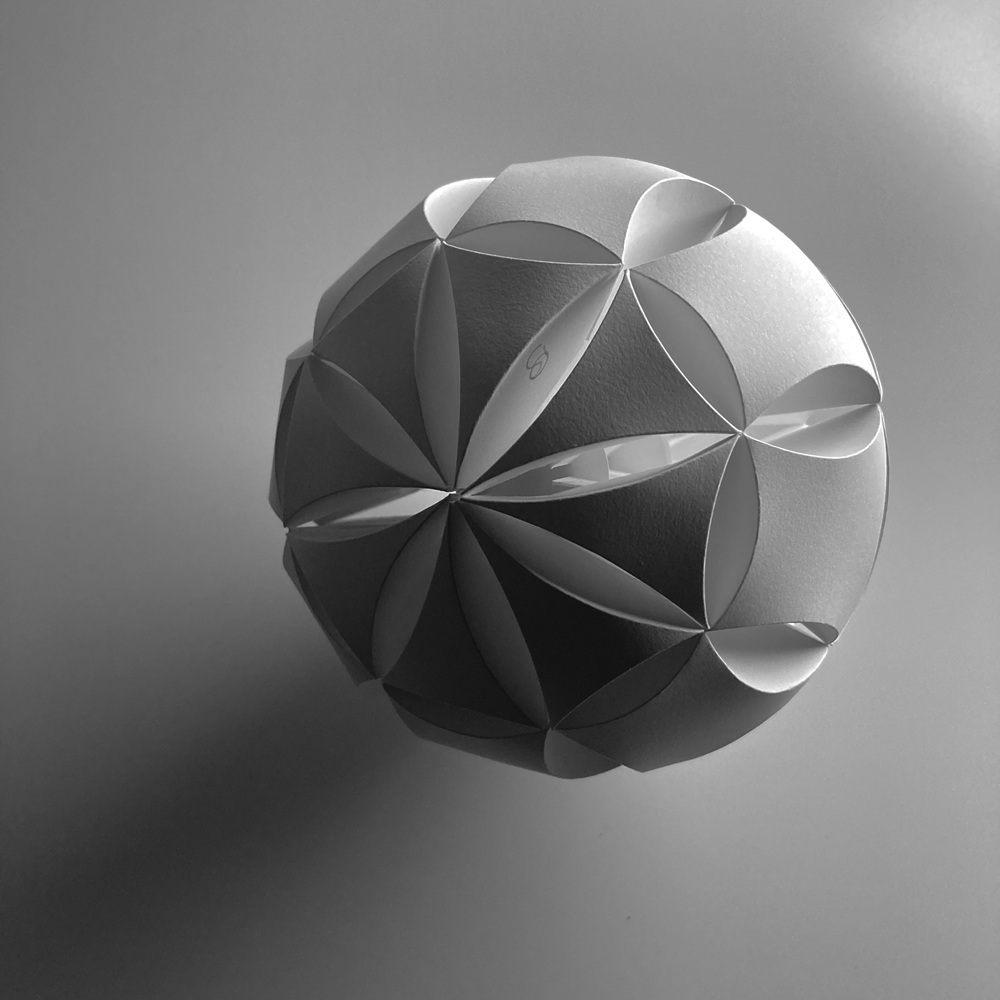
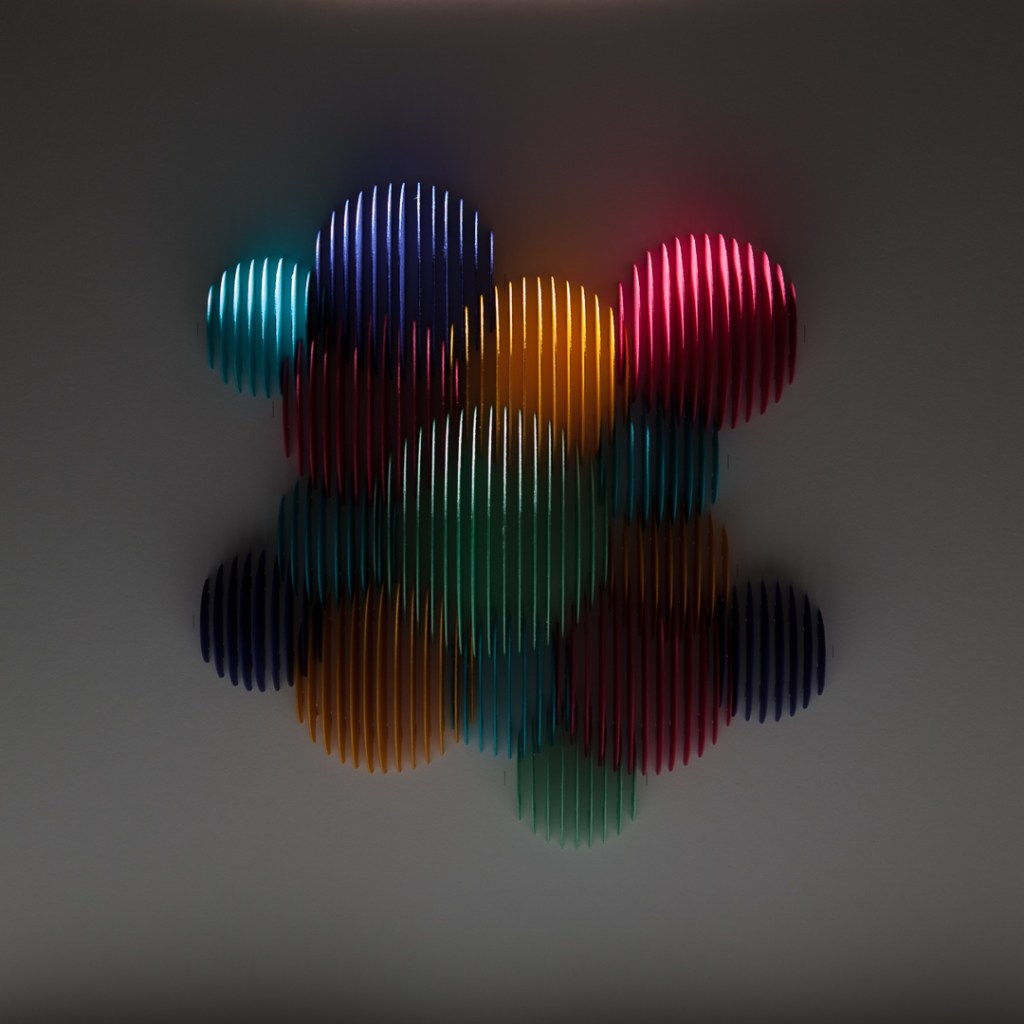
Spencer is known for his intricate paper orbs which not only stand out for their construction and design, but also the dramatic outcomes when properly lit and photographed. “I am fascinated with turning something that’s flat into something sculptural,” he explains. “There’s something a bit magical about that. The orb works are especially good for this, people can’t always tell what they are made of and I love that, it’s like a bit of alchemy.”
Trial and error
While Spencer has a clear understanding of engineering and geometries, not all of his work pops out as perfect. “You don’t see the stuff I’ve thrown away,” he laughs. “The orb series took a bit of engineering. I rely on geometry quite a bit but I can’t always predict the shapes that show up in negative space.
“Working with straight geometric lines is a fine and predictable way to work, but when you start to introduce curves to the folds, it can distort the overall outcome. I wanted those works to be a perfect orb and my geometry could only get me so far, so I made them over and over again to see what would work until I was happy with it.”
This might sound like some light experimentation, but Spencer’s exacting artworks and the commitment to trial and error take time. “It took about three years and I almost gave up,” he says. “I am still making orbs, there’s a few more that I want to make until I get it out of my system.”
See more of Paul’s work at paulspencerart.com

Jamillah Knowles is a writer, artist, AI specialist and RWA Friend. You can read a Floating Circle Meet the Artist Q&A with her here.

 The Floating Circle
Wow this actually amazing and amazing 👏
LikeLike