
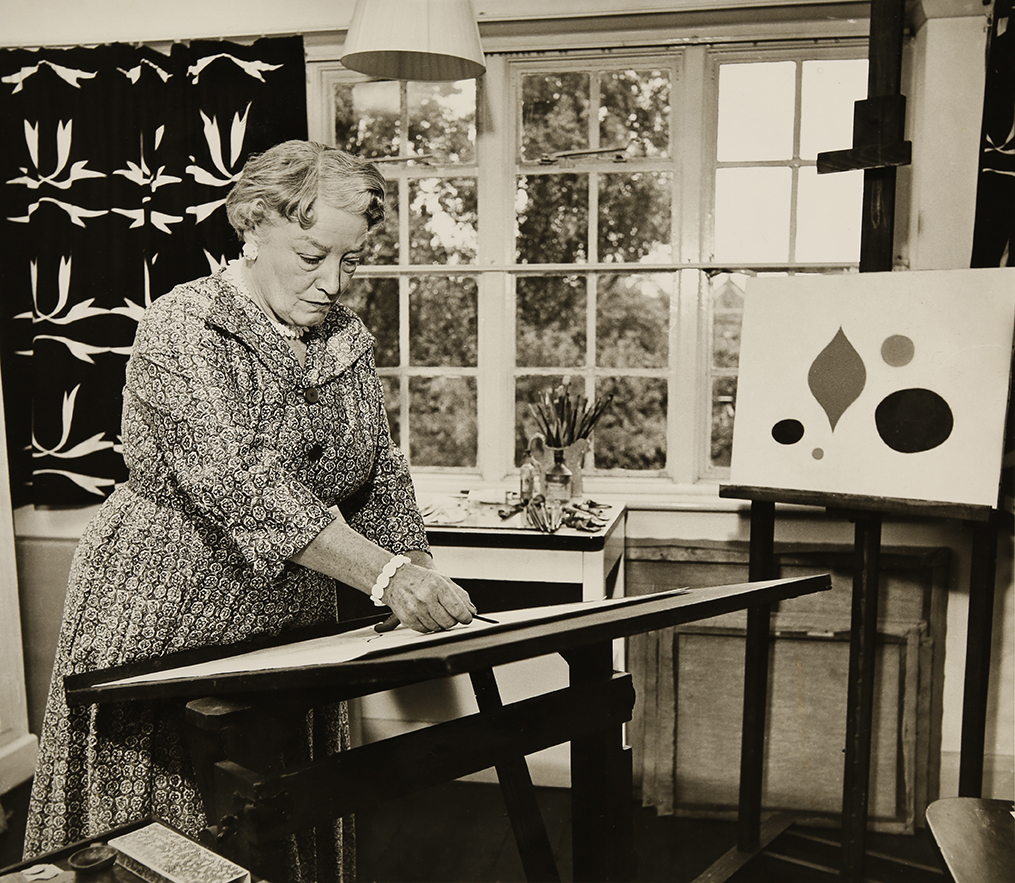
This January the RWA will host the largest solo exhibition of the work of Paule Vézelay in over 40 years. Here, the show’s curator SIMON GRANT talks to us about Vézelay’s remarkable life, her connection to Bristol, and why she is a key figure of 20th-century British abstract art…
Why is Paule Vézelay important in British art?
She was a pioneering figure who regarded herself as one of the first English abstract artists with a work dating from 1928. The drawing is now lost, but she was a definite equal, not just to fellow English artists Barbara Hepworth, Ben Nicholson and Henry Moore but also the important European artists that she got to know well when she was living in Paris in the 1920s and 1930s, such as Sophie Taeuber-Arp, Jean Arp, André Masson and Marlow Moss.
I think that she is such an under-appreciated artist, so it is wonderful to have the opportunity to celebrate her art and life now.
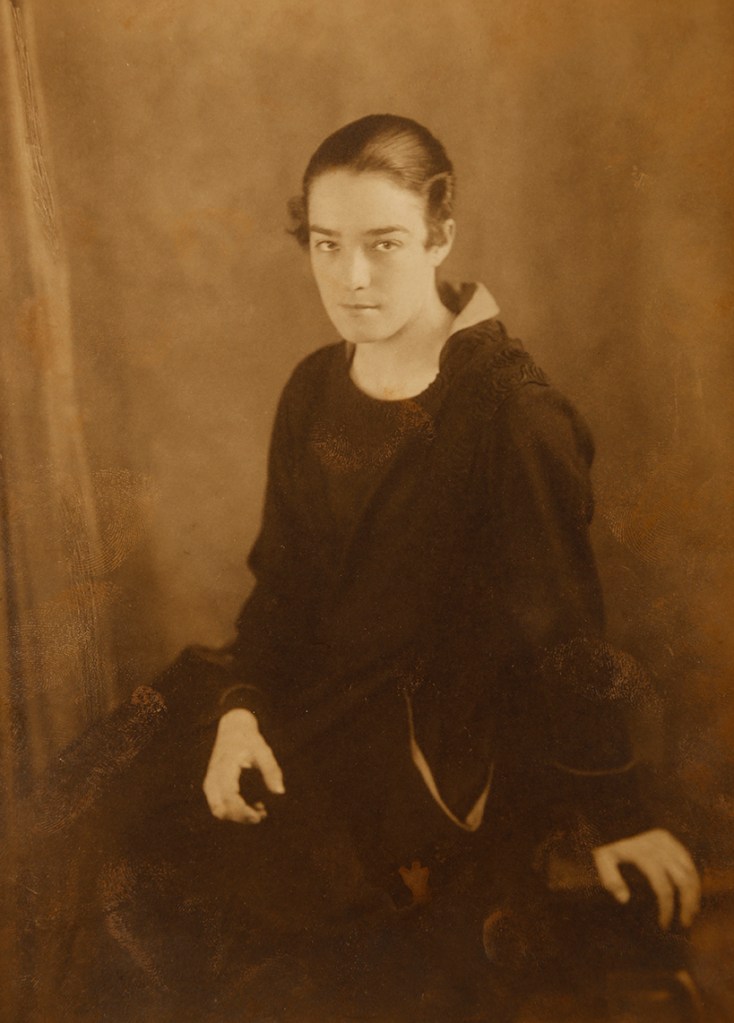
Vézelay was born in Bristol in 1892 as Marjorie Watson-Williams – yet ended up working in Paris as an avant-garde artist under a completely different name… She sounds a remarkable woman. Can you give a little flavour of her life – and what she was like as a person?
She had remarkably independent spirit. As a young woman growing up in Bristol, she knew that she wanted to become an artist, and thanks to her supportive father she was able do that. By 1920 she had done her artist training in both Bristol and London and made the bold decision to move to Paris under her own steam.
What is remarkable about the years that she spent there, from 1920 until 1939, is that from being a completely unknown female artist she would become an important figure in the international avant-garde. The epitome of this was the support she got from Wassily Kandinsky who recommended Vézelay to be part of several influential European exhibitions.
She was single-minded in her art, constantly developing and pushing her ideas. She was determined and resilient throughout and despite repeated obstacles of misogyny along the way, she received great success as an artist. Sadly the outbreak of the Second World War put a stop to that. However she continued her art on her return to the UK. In the 1950s she expanded her repertoire into a very successful range of fabrics, mostly with Heals. In this, we could say her dexterity in many media – painting, sculpture, textiles, poetry, illustration and writing connects her to her friends Sophie Taeuber-Arp and Sonia Delaunay.
Interviewed in the last year of her life by Germaine Greer, she declared that she had no regrets, and had found great joy in her art, which is a sense that comes across strongly in all her work. She had a positive spirit that I got to increasingly admire the more I learnt about her.
The RWA exhibition opening in January will be the largest solo show of Vézelay’s work in over 40 years. How did the project come about?
I had a long-held interest in Vézelay since my time working at Tate, where they hold many of her works as well as a substantial part of her archive. I knew about the strong Bristol connection, so I talked to the RWA about the idea of putting on a show. The curator at the RWA at that time Gemma Brace was also planning a Vézelay exhibition so I asked if we could do it together which we did, until Gemma moved to work at the Arnolfini. So it has very much been a collaboration. I had also known the family for some time, and they have remained very supportive of the exhibition taking shape.
What can visitors expect when the visit the exhibition – and what do you hope they will take away from it?
Visitors will see how we have told the story of Vézelay’s art, from her earliest days in Bristol to her very late works inspired by JMW Turner that she painted in the late 1970s.
What is exciting is that beyond the loans from institutions across the UK, we have managed to unearth many previously unseen or little seen artworks which I think the audience will enjoy seeing.
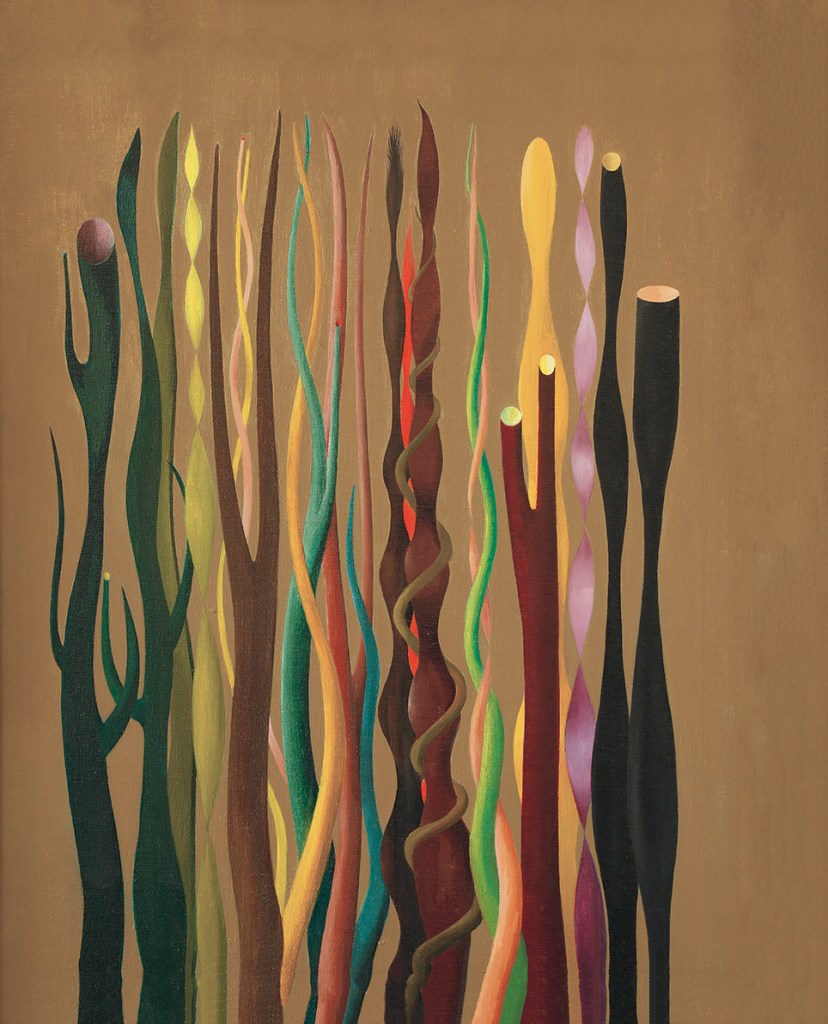
There is a great deal of variety in her work, from her early etchings done when she was studying in Bristol, her figurative works from the 1920s and then her decisive move into abstraction. We will be including some of her sculptures and textiles too which will provide a parallel visual link to her paintings and drawings. We are also including work by her fellow Paris-based artists Marlow Moss and Alexander Calder.
I really hope that visitors will take away the feeling that Vézelay was a passionate yet serious artist who created an incredible body of work, and as a figure who deserves to be far better known.
What were the most challenging – and rewarding – things about curating the exhibition?
I can answer both those questions with one answer. It was searching and finding works and archival information about Vézelay that I did not know about and that we can show to visitors.
Do you have a particular personal favourite work in the show?
If I am allowed two, I would say the first is the wood cut titled Mr. Fratellini in his Dressing Room (1923) that was re-discovered in the Royal West of England Academy collection. It shows Paul Fratellini, one of a trio of circus performers at the famous Cirque Medrano in Paris. Vézelay regularly visited the circus in the early 1920s and got backstage access after the performances to talk to Paul and his brothers. I love the intimacy of this simple image. It also suggests that Vézelay never wished to be a mere passive observer, but took the time to get her know her subjects.
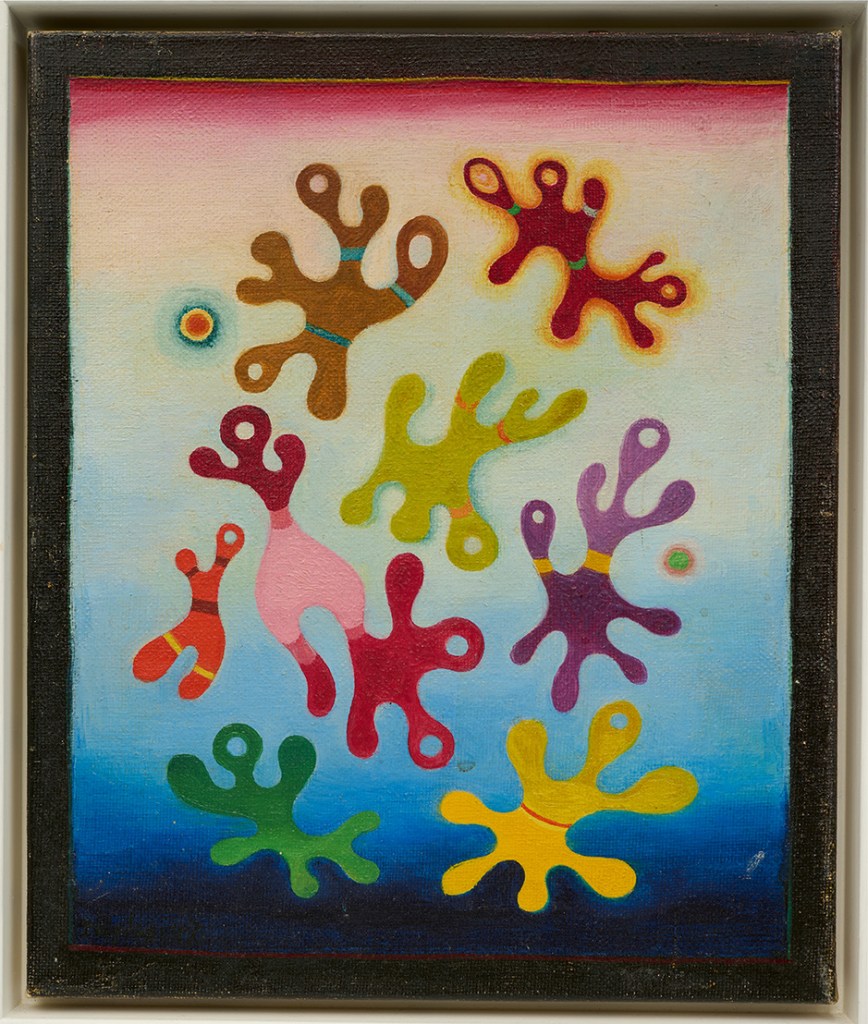
The other picture is a painting called Eight Curved Forms and Two Circles from 1946. A friend who is lucky enough to have a few Vézelay pictures bought this from a German gallery quite recently. I had never seen it before, but in helping him authenticate the work, the Vézelay family found a black and white photograph of it, so I knew it was the real thing.
As well as being a beautiful picture, produced just one year after the devastation of World War Two, some of which she had witnessed in Bristol, I love the energy and joyous vitality of it.

 The Floating Circle
Look forward to coming to see the exhibition.
LikeLike