
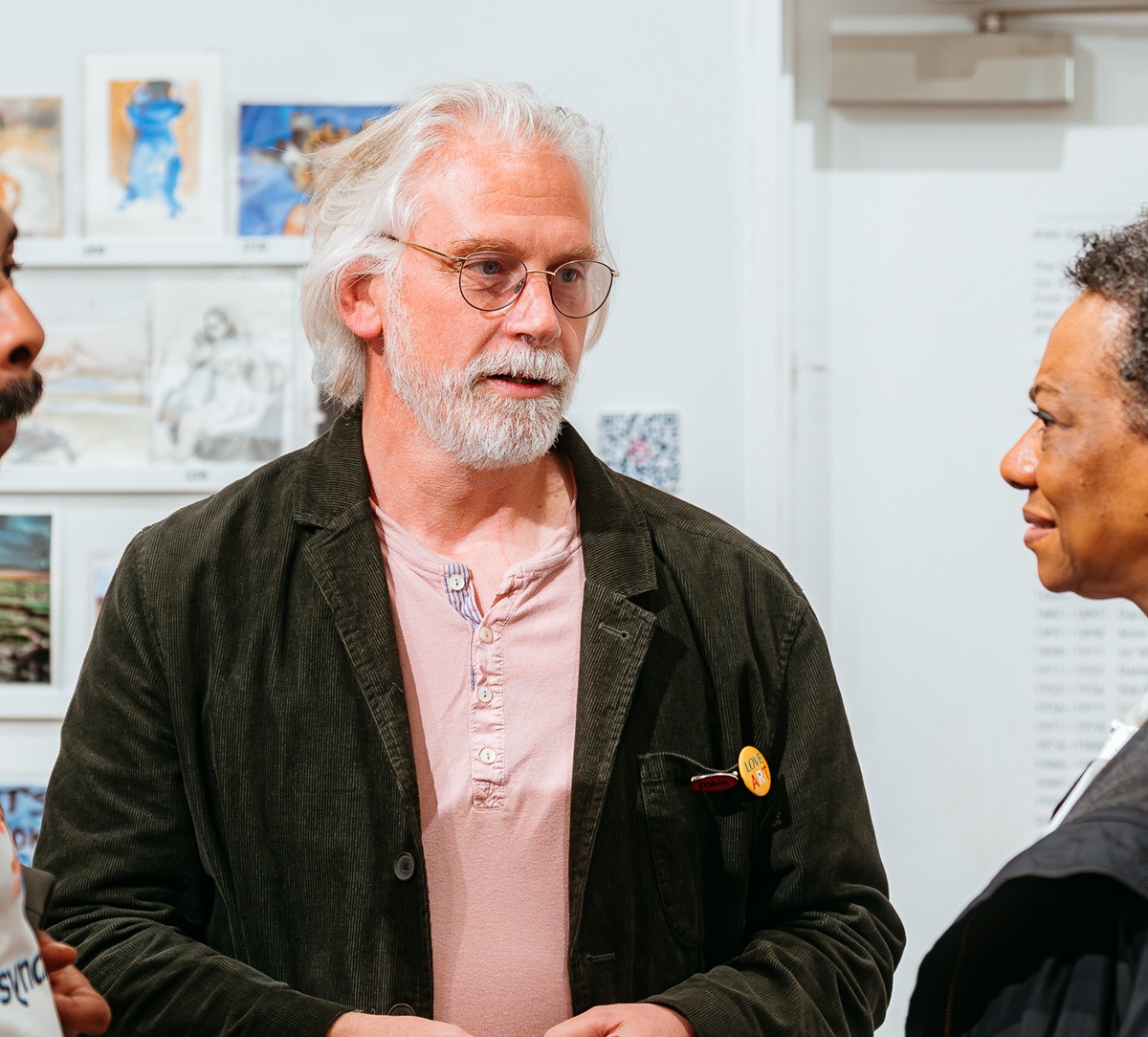
The Friends are delighted to welcome the new President of the RWA, Hamish Young, who was elected in October 2025. Here he tells us about what the role means to him and sets out his vision for his Presidency…
“… I really want this to feel like a home for Art and Architecture, but most importantly a home for all of you…”
Hamish, congratulations on your election as President. What does this role mean to you personally, and how do you see it fitting into your life as an artist?
Thank you so much. This role means a great deal to me personally and professionally. My journey with the RWA began, like many others, with the joy of having a piece accepted into the Annual Open, following a previous rejection. I was proud. So proud that I brought my whole family to the opening.
That moment marked more than a professional milestone; it sparked a much deeper connection that led to me getting involved. Since then, this has grown into close collaboration with the dedicated staff team, volunteers, RWA friends, trustees, academicians and artist network members. It is this connection between people, across disciplines and united by shared purpose that makes the RWA so special.
That same connection motivated me to stand for President. It weaves seamlessly into my life as an artist and educator, providing opportunities to connect, learn, and collaborate with others who share a lifelong passion for art.
The RWA is a unique organisation – part academy, part gallery, part charity, part community. How do you describe it to people who don’t know it well?
At the RWA you will always find an enormously warm welcome. When you ascend the stairs under the magnificent Walter Crane Murals you enter one of the most beautiful places to view world-class art in the country. Identity for people and organisations is never just one thing. Each part is fluid. Many different parts make the whole.
At the RWA, when these different parts work together they create a unique space for professionalism and passion, as well as a vital source of wellbeing and learning. We bring world-class exhibitions to the Southwest and showcase artistic talent in the region. We are a place where excellence and generosity go hand in hand, and where our legacy is as future-facing as it is grounded in tradition. This year we subsidised 4,000 young people (aged 18 and under) to explore exhibitions with free entry and I’m certain there will be future Academicians and cultural leaders amongst them.
Of course, we are an independent charity without regular public funding. We depend on the generosity of our supporters, including our wonderful Friends and tickets sales to keep our bold exhibitions and community projects thriving. So, if you come and visit you not only get to experience world class art in a stunning location, you also contribute to sustaining our vital work.
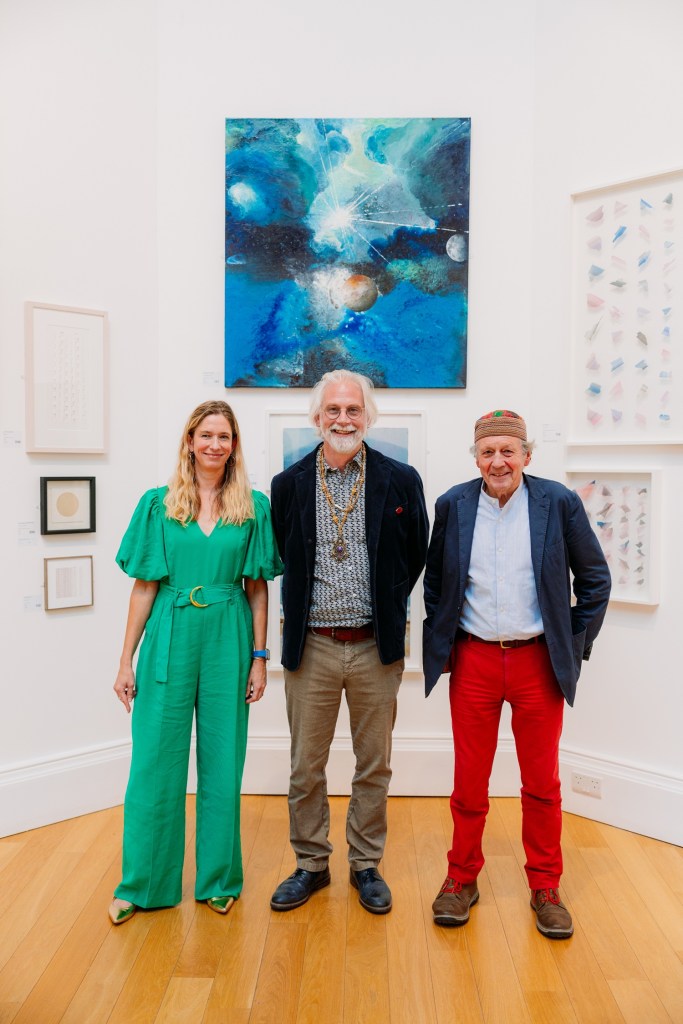
As President you represent the Academicians – artists and architects elected by their peers. How do you see their role within the wider RWA, and what responsibilities do you think come with that distinction?
The RWA exists because the artist daughter of a blacksmith, Ellen Sharples, achieved something incredible by founding a landmark academy which not only presented art, but taught it, too. The RWA has always stood for ambition and excellence underpinned by progressive values. I believe the relationship between the RWA and the Academicians is value driven. Academicians are artists elected by their peers for their contributions as leaders in contemporary creative practice and we have a wealth of expertise that the organisation draws on.
At the RWA we expect everyone connected to it to uphold our values by being creative, committed to excellence, collaborative, entrepreneurial and proactively inclusive. The President and the Academician body form a critical part of the RWA’s collaborative leadership structure, working closely with the Board of Trustees (led by Chair George Ferguson) and the Executive Team (led by Director Ren Renwick) to drive the Academy forward. Everyone involved with the RWA has a responsibility to uphold Ellen Sharples’ legacy to ensure it is an ambitious and progressive place where people connect, learn and nurture their life-long journey with art.
What do you think the RWA can offer its Academicians, and what can Academicians offer the RWA in return?
Academicians are at the heart of the RWA, leading through our work on the trust board, council and committees. Academicians also work closely with staff and volunteers delivering talks, exhibition tours, in-conversation events, portfolio reviews, curating exhibitions, teaching, collaborating on selection panels and curating exhibitions.
But perhaps some of our most important work is talking with artist and education colleagues in the Southwest and beyond at various events that enable people to come together and connect through art. With the Academicians, who I see a our artist leaders, and our brilliant staff team working closely together I know the RWA will continue to grow. I often talk with artists who describe their experience of working as isolating. The RWA offers a place for artists, including Academicians, to come together as a community, connect, share ideas and lived experiences.
As Vice President, you’ve been a great friend to the Friends, contributing to events and exhibitions over years. How do you see the Friends’ role within the RWA evolving?
The Friends are an integral group in our community who support the RWA in so many ways including raising vital funds. I have had the privilege of joining Friends meetings and I’ve always been struck by everyone’s deep passion and commitment to the RWA community. From arranging wonderful trips to biennial exhibitions and regular artist talks, the Friends are absolutely connected through art at the RWA.
The Friends’ voices and their presence will continue to help drive an ambitious and progressive programme at the RWA ensuring more and more people connect, learn and nurture their life-long journeys with art. I am looking forward to continuing to collaborate with you all.
Looking ahead, what are your hopes or priorities for the next few years – for the Academy, its artists, and everyone connected with it?
As an adoptee, I have long understood the importance of belonging. It is no surprise, then, that I’m drawn to building inclusive spaces where creative identities are recognised and celebrated. I want to be part of an Academy where artists feel heard, seen and celebrated. A place where excellence and generosity go hand in hand, and where our legacy is as future-facing as it is grounded in tradition. The priorities I set out in my presentation to the Academician council were:
- Deepening the sense of belonging among artists;
- Removing barriers to ensure representation across our membership reflects the city and wider world;
- Supporting artists’ aspirations throughout their careers;
- Strengthening curatorial leadership and increasing sales potential;
- Fostering professional development and shared leadership.
I embark on the Presidency at a moment of significant strength for the RWA, following the revitalisation of its historic building, continued development of a thriving program and a renewed energy to deliver an ambitious strategy. I continue to work closely with the RWA’s extraordinary staff, volunteers, friends, trustees, patrons, and especially with our artists. I know that together we will ensure the RWA continues to be an ambitious and progressive place where people connect, learn and nurture their life-long journey with art. I really want this to feel like a home for Art and Architecture, but most importantly a home for all of you.
You can read our Meet the Artist Q&A with Hamish here.
Photo top : Alastair Brookes.

 The Floating Circle