
Ahead of the Friends’ trip to Oxford in December, PAT TRIGGS looks at the long-time collaboration between artist Stanley Donwood and the band Radiohead, subject of a new exhibition at the Ashmolean…
by Pat Triggs
Full disclosure: Until now I had never knowingly listened to any of Radiohead’s music. All the experts in post-punk music and culture (including my children) will I hope forgive me. However, when I saw that the Ashmolean Museum of Art and Archaeology in Oxford was putting on an exhibition This is What You Get, ‘exploring the visual art of Stanley Donwood, Thom Yorke and the iconic images of Radiohead’ I was surprised and intrigued. I’ve always been uneasy about labels: fine art, popular culture, high culture, craft, women artists, textile art, design. Not because they are not useful, but because they come loaded with assumptions about value and worth. So to have an establishment institution like the Ashmolean giving time and space to the album covers, CD booklets, vinyl records, t-shirts, merchandise and website of a commercially successful rock group was interesting. With the help of YouTube and the ever-branching highways of search engines I began to listen and research.
Radiohead is a band, local to the Ashmolean, formed in the mid-1980s by five pupils at Abingdon School. Calling themselves On A Friday they performed at the Jericho Tavern in Oxford and very quickly were offered a record deal. But each chose university instead and it wasn’t until 1991 that they were all together again in Oxford. A contract with EMI came, followed swiftly by a now legendary single, Creep, and a first album. Thom Yorke, lyricist and singer, was not happy about the artwork produced by EMI for the project. He had been at Exeter University with Stanley Donwood and, instigated by him, they began to work together on the design of covers for the group’s second single, My Iron Lung, and album, The Bends. Since then Radiohead have, perhaps unusually, maintained creative control of the visual content of everything accompanying their music. Yorke and Donwood have also co-curated the exhibition, with Dr Lena Fritsch from the Ashmolean.
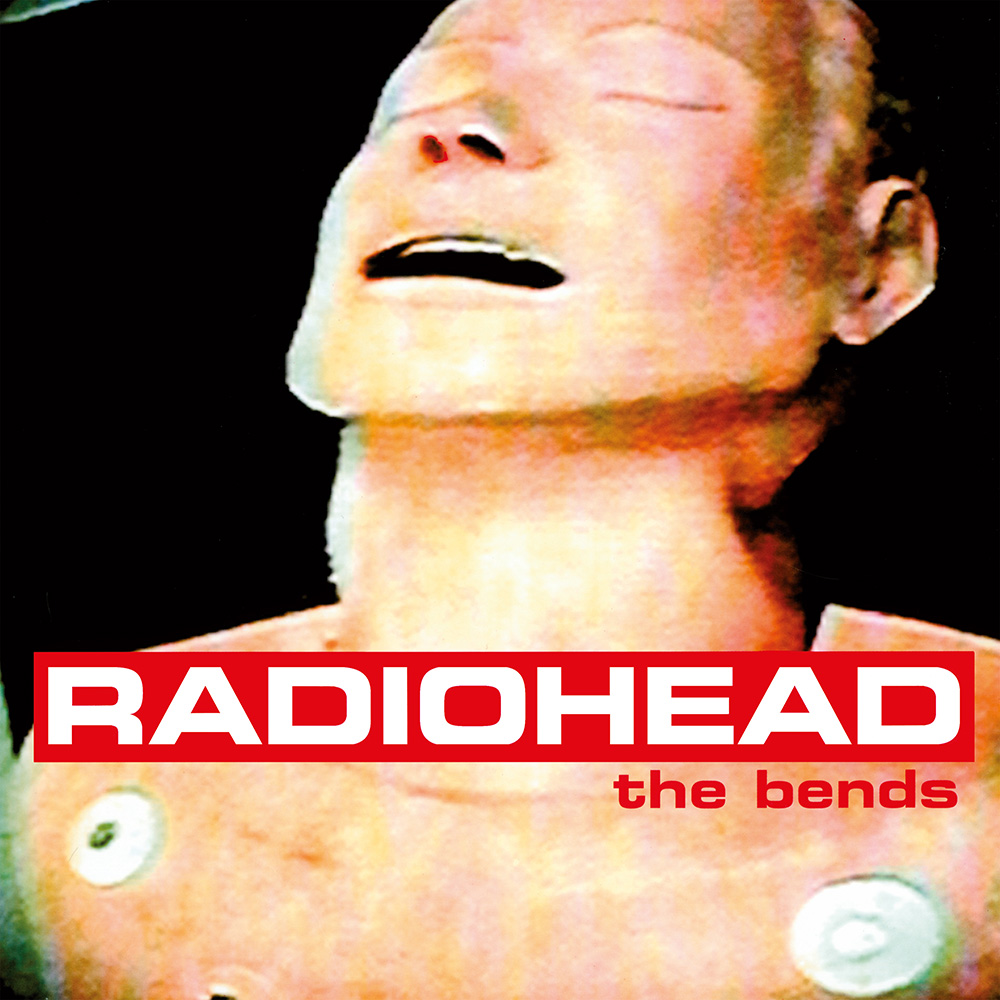
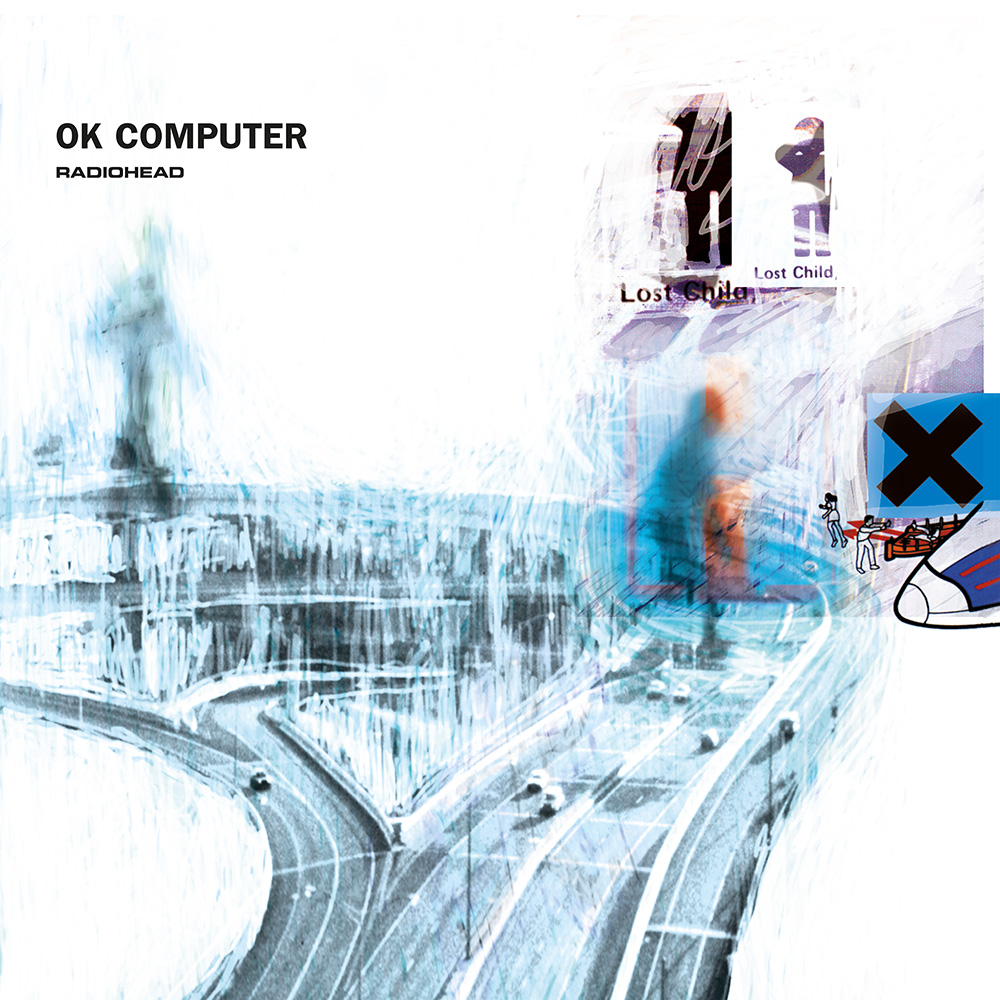
The Yorke and Donwood creative partnership is ongoing and unusually collaborative. They have talked and written about the process and the story of their first venture (featured in the exhibition) is indicative of what followed.. Needing an image of an iron lung they somehow got into the basement of the John Radcliffe hospital but having found what they were looking for decided it was visually too boring. They did find a dummy used for practising resuscitation and agreed that its face ‘like that of an android discovering for the first time the sensations of ecstasy and agony simultaneously’ would do very well. They manipulated the filmed image to produce the first Yorke and Donwood record cover. The image and the way it was created, like the song, is mischievous, ironic, iconoclastic , self-referential and experimental. The experimentation continued in the computer-generated artwork for the third album OK Computer, and for subsequent projects with the use of a great range of art materials, methods and styles.
There is no shortage of Yorke and Donwood interviews. These, and the work itself, show a clear ambivalence about much of life in the last half century: technological advances, global capitalism, the ‘war on terror’, the music business, cities and countryside, the artworld, fame and success. As well as perennial themes of love and loss, existential angst. Central to the visual content is that Donwood is present and listening when the band is recording. He draws and sketches as the start for what will become a range of images for each project. Both Yorke and Donwood work on the artwork, sometimes at the same time. King of Limbs, the eighth album in 2011 was named for the thousand year old oak tree in Savernake Forest. It is a symbol of both endurance and decay; the forest is both beautiful and terrifying. Donwood said the music made him think of ‘immense multicoloured cathedrals of trees, with music echoing from the branches whilst strange fauna lurked in the fog’. He and Yorke drew trees with eyes, limbs, mouths, creating ‘strange multi-limbed creatures’ inspired by Northern European fairytales. The exhibition promises a number of notebooks and sketchbooks which show the evolution of such images, and of Yorke’s lyrics. It also includes Donwood’s work with the Smile, a group created in 2018 by Johnny Greenwood, from Radiohead, and Thom Yorke.
Artists being associated with bands is not unknown: Peter Blake famously produced covers for The Beatles, the Who and Band Aid; Andy Warhol is linked with Velvet Underground. Stanley Donwood has produced book covers for JG Ballard novels, art work for Glastonbury Festivals, illustrated Hardy poems for the Folio Society and worked collaboratively with Robert Macfarlane on a book about holloways. But he has exhibited paintings and art installations in the UK and around the world. He has also issued series of screen prints, some incorporating Radiohead images. ‘It’s a way of getting pictures out in the way they should be seen; not as four colour litho on cheap paper but as real pieces of art work that have much greater visual impact.’ He and Thom Yorke are associated with the Tin Man Art gallery. In 2003 Thom Yorke worked with the RSC on Hamlet Hail to the Thief an adaptation with the music from Radiohead’s sixth album. Christine Jones, director, said: ‘we became aware of how many songs speak to the themes of the play. The production was re-created earlier this year in Manchester. It’s clear that both Yorke and Donwood are not unacquainted with high culture, or are perhaps refusing the categories. As, increasingly, are museums and galleries.
This is What you Get at the Ashmolean, though, has received mixed reviews.
In the Guardian Eddy Frankel asked the ‘but is it art?’ question: ‘Does it stand up to scrutiny when removed from the context of the records and merchandise it was designed for? Plenty of the work here, has entered the wider public consciousness in a way that proves album artwork has cultural heft….But that doesn’t mean any of it is especially good, or even interesting, as art.’
In the Independent Roisin O’Connor was enthusiastic. ‘It’s fascinating, and not just for Radiohead fans but for anyone intrigued by the interweaving of sonic and visual art forms. Art snobs beware, for this is a marvellously accessible exhibition from one of Britain’s most enigmatic bands.’
With all I have learned and heard I will be visiting the exhibition to make up my own mind. I’m going with a Friends of the RWA trip on Thursday December 11th December. Why not join me? Here’s how you can sign up.
Image top: The Bends album cover, Thom Yorke & Stanley Donwood, 1995 © 1995 XL Recordings Ltd

 The Floating Circle