
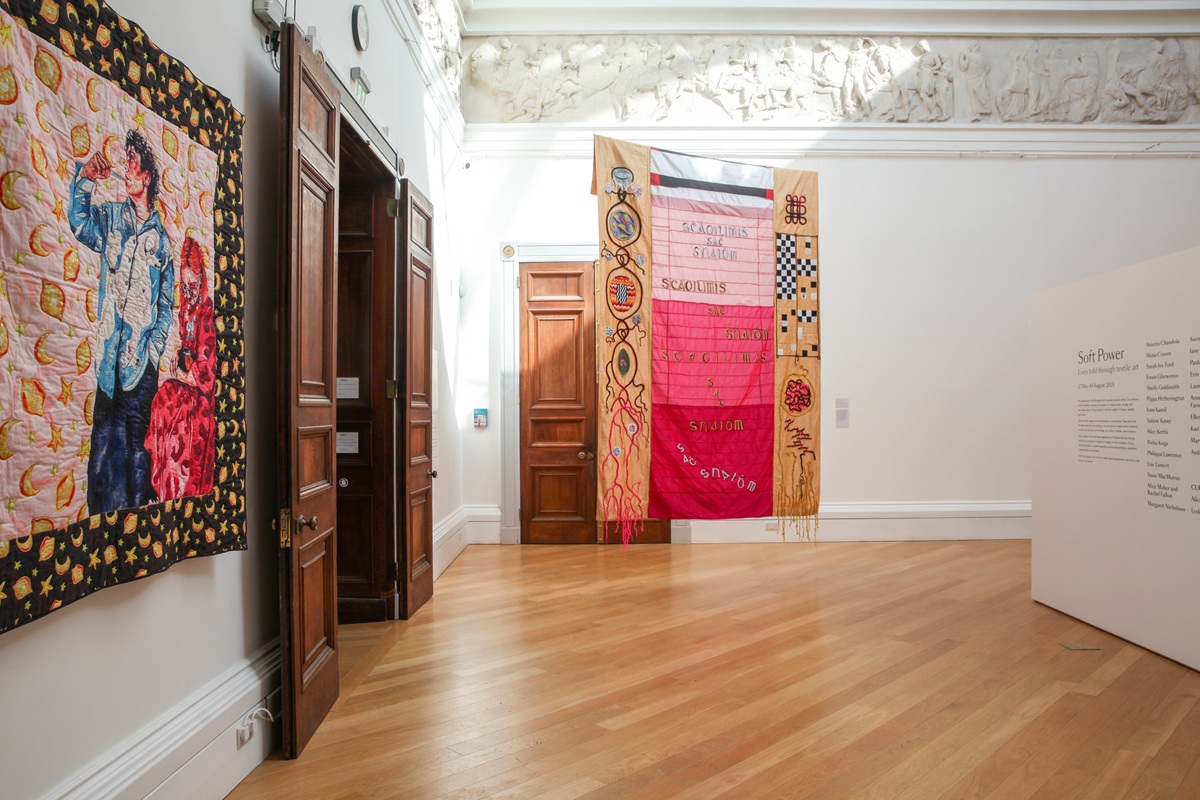
“Cloth speaks of everyday experiences: of longing, love unspoken, and loss. It also describes ambition, transformation and dreams.”
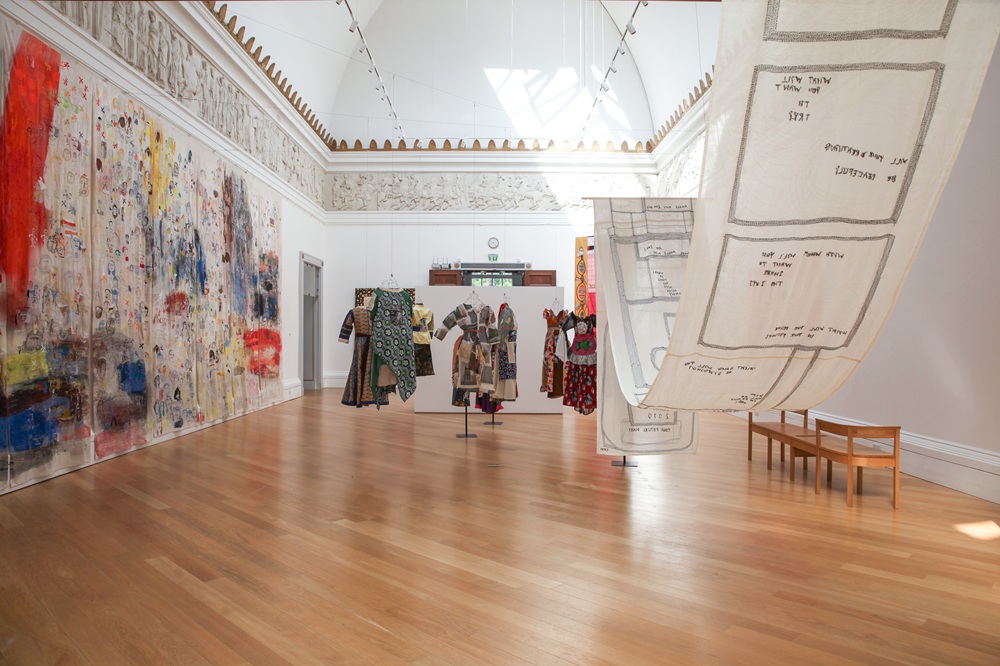
Soft Power – Lives Told Through Textile Art is the RWA’s major summer exhibition for 2025. Co-curated by internationally renowned textile artists and scholars Professor Alice Kettle and Professor Lesley Millar MBE, the exhibition brings together contemporary and historical works that use textiles as a powerful form of storytelling. From intimate personal narratives to bold political statements, the artworks on show reveal the extraordinary capacity of cloth to connect, express and transform.
Soft Power runs at the RWA until 10 August 2025. Ahead of the opening, the curators spoke to The Floating Circle about the themes of the show and what visitors can expect.
What inspired the title Soft Power for this exhibition, and what does it mean in the context of textile art?
The exhibition builds on themes explored in our book Reading the Thread: Cloth and Communication (Bloomsbury Academic, 2025), and on previous collaborations such as Fabric, Touch and Identity (Compton Verney, 2020). Soft Power illustrates how textiles can be used to record human experience, often in ways that are gentle but profound.
Textiles have long been used to tell stories and record experiences. What kind of stories are being shared in this show – and why are they important right now?
Textiles have always carried memories and personal histories—through grand woven tapestries or small stitched samplers. Artists in this show use cloth to explore themes of longing, loss, love, conflict, and ambition. These deeply personal and socially resonant narratives connect across cultures and generations.
Themes of identity shaped by migration, the hidden lives of marginalised individuals, and transformative personal journeys are interwoven throughout the exhibition.
You’ve brought together a very international group of artists. How did you select them, and what kind of dialogue were you aiming to create?
The exhibition grew from a four-year research project. Using our national and international networks, we sought out artists whose work speaks to the core themes of Soft Power. Ongoing conversations with these artists helped shape the exhibition’s structure.
It was vital that the works exist in dialogue with each other—moving across and between all the RWA galleries.
Does textile allow for a different kind of emotional or political expression than other art forms?
Absolutely. The softness and familiarity of cloth invites closeness and empathy. It allows artists to approach difficult or emotional topics without alienating the viewer.
Cloth connects us with our histories, families, and inner lives. It speaks of everyday realities and dreams alike. Again and again, the works in Soft Power show that the personal is political—quietly, but powerfully.
Can you highlight one or two works that particularly moved or surprised you?
Alice: The collaborative works by Afghan refugees working with Amneh Shaikh-Farooqui stand out. They are witty and exquisitely made, using the “strong stitch” to depict joyful scenes—cooking, applying makeup, going out for the day. But beneath these everyday moments lies a powerful commentary on the danger and repression these women face.
Lesley: It’s hard to choose—this exhibition is all about relationships between works. But Philippa Lawrence’s piece, made directly in the gallery with nails and knotted bedsheets, was a leap of faith that paid off. It came into being on-site, and its impact is remarkable.
How do the contemporary works connect with historical figures like RWA founder Ellen Sharples?
We’ve included works that honour overlooked histories and celebrate artistic lineages. Ellen Sharples’s embroidery—never shown before—is exhibited alongside work by Audrey Walker, a key figure in late 20th-century art textiles and a teacher to Alice.
We also include works from Diana Springall’s embroidery collection, a ‘portrait’ of her studio by Paula Reason, and contemporary works by artists such as Susie MacMurray and Suzumi Noda that reinterpret traditional materials and forms in fresh ways.
Across all these works, there is a dialogue between past and future, between memory and imagination.
What does your curatorial collaboration bring to the exhibition?
We bring different but complementary strengths. Lesley has pioneered textile curation internationally, while Alice brings a practising artist’s deep understanding of touch and material.
We’ve known many of the artists for years and trust each other’s instincts. That trust has been at the heart of shaping this exhibition.
The RWA is also working with local refugee groups on a co-created installation. How does this extend the show’s themes?
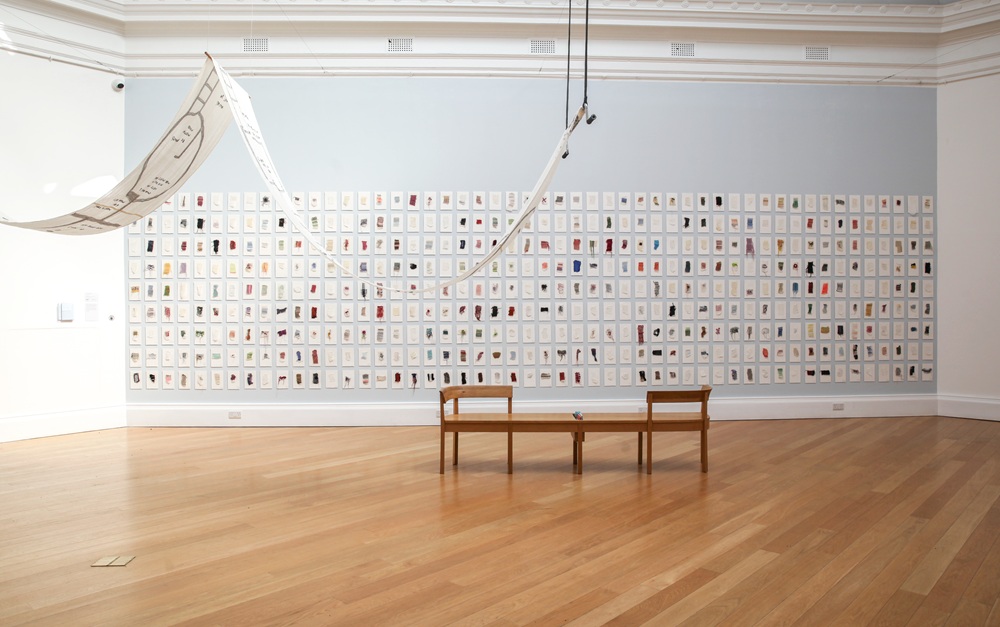
The Connecting Through Cloth installation, in the Sharples Gallery, builds on the idea that textiles connect people—across generations, borders, and social divides.
Through community workshops, artists have collaborated with Afghan women in Pakistan, the Keiskamma collective in South Africa, and various UK-based communities.
These pieces honour both individual experience and collective creativity. Cloth becomes a space of shared making and meaning.
For visitors unfamiliar with textile art, what would you say to encourage them to visit?
Textile is part of everyone’s life. You’ll recognise the materials, but here they’re transformed—through extraordinary skill and imagination—into something astonishing.
Some works will move you. Others may challenge you. But all of them reveal how powerfully cloth can carry meaning and emotion.
What do you hope visitors will take away—emotionally, artistically, or politically?
When an artist puts work into the public domain, they let go—it becomes open to each viewer’s response. As curators, we do the same.
We’re both passionate about the richness of textile as an art form. We hope this exhibition shows just how deeply woven cloth is into all of our lives—not just as material, but as witness and companion.
Now that vision is out in the world, we hope it invites new possibilities and conversations.
– Professor Alice Kettle and Professor Lesley Millar, Co-Curators of Soft Power

 The Floating Circle
1 Comment