
A student reports from the Connected Futures Festival in Bristol, where technology, science and imagination meet in surprising and creative ways.
This piece was written by Amelia Nixon-Surrey, a student on work experience with The Floating Circle. During her time with us, Millie visited the Connected Futures Festival in Millennium Square, part of an ambitious programme from the University of Bristol exploring how technology will shape the way we live, communicate and create in the decades to come.
by Amelia Nixon-Surrey
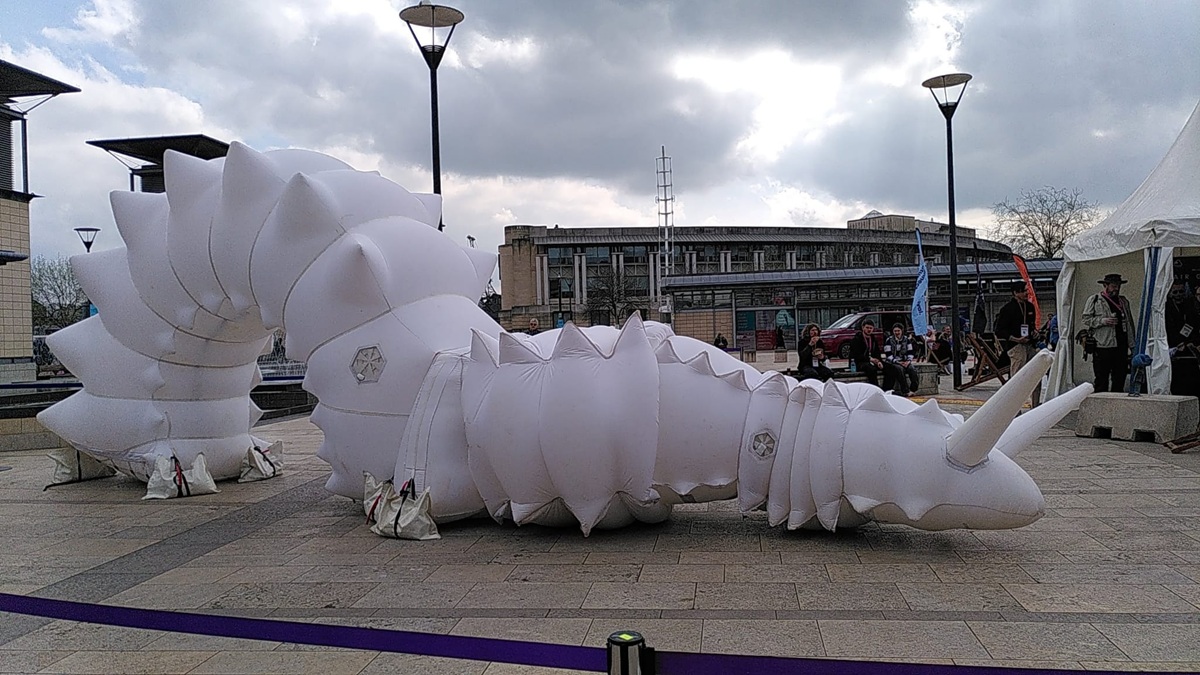
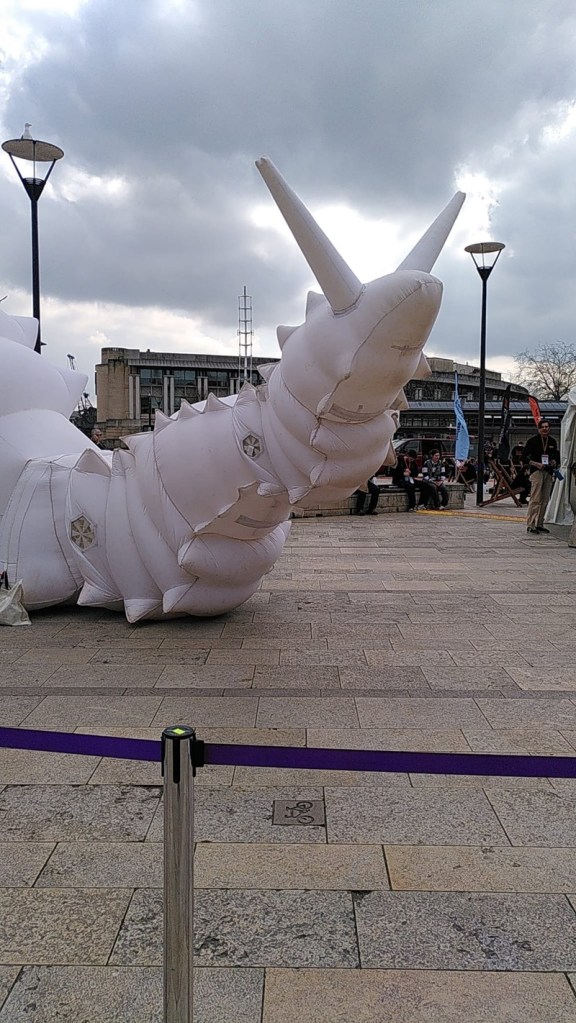
The first thing I saw upon arriving at Millennium Square was a giant robot snail, seemingly greeting passersby – instantly piquing my interest and making me wonder: what is this all about?
We spoke to Ana Serra from the University of Bristol to find out.
The Connecting Futures festival is all about introducing the public to ideas of how connective technology might look over the coming decades and its real life applications, getting their input and seeing how they react to new concepts. Currently, we have 4G – and even 5G – technology, but Connecting Futures is all about ‘6G and beyond’. The festival was bustling with academic researchers as well as corporations, all exhibiting their impressive new technology.
One such application of this future technology was demonstrated in ‘Holographic Humans’ – a demo that allows visitors to become a hologram, and see themselves generated into a second location. I was able to experience this by standing in the center of a 36-camera set up, where the cameras captured 10 seconds of movement from all angles, creating a 3D model, which was then broadcast onto a display screen. Getting to experience this,and seeing myself moving on the screen, was a truly remarkable experience, and really helped give me some insight into how some of these technologies might look in the not-so-distant future.
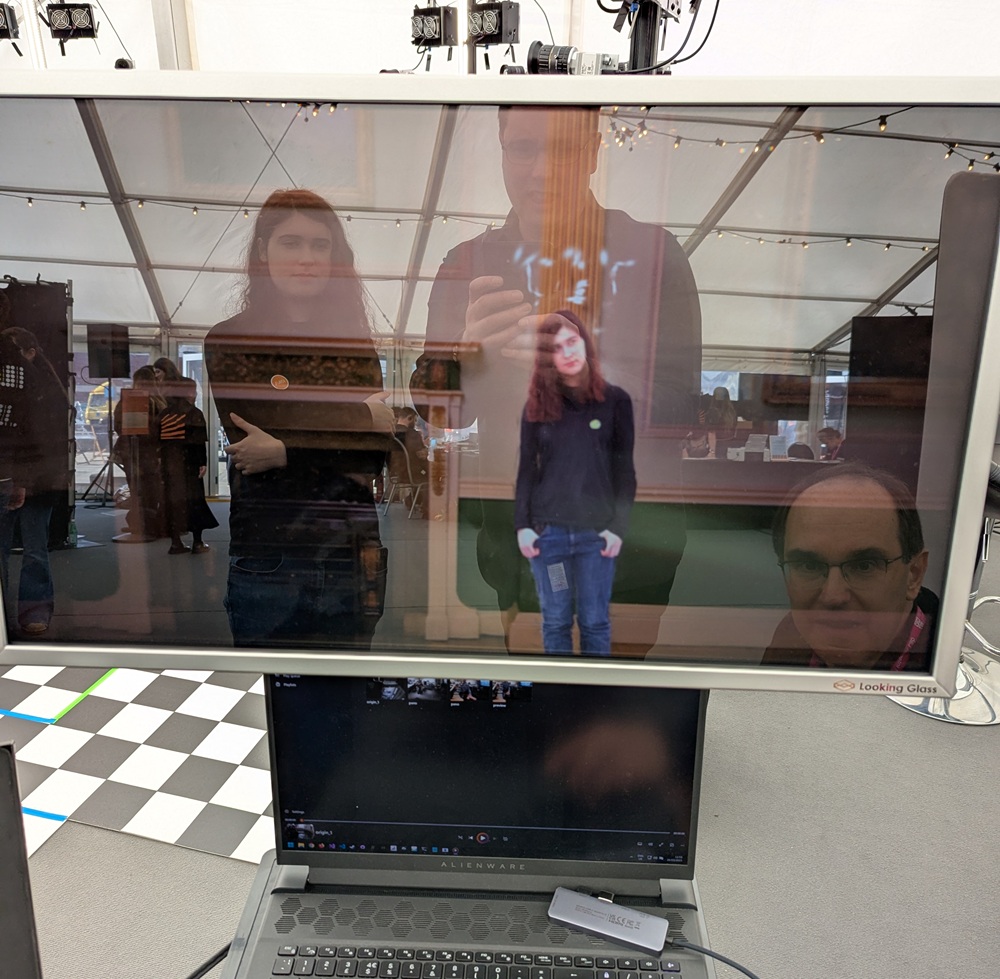
Not only is this an extraordinary technological feat, but, as Vassilis Seferidids, the co-founder and CEO of Nephelie Technologies explained to us, it could have an incredible impact on both the entertainment and culture industries. For example, the holographic view enables details such as the reflection of light on a sequined dress to be seen from different angles, something that was previously impossible. This could be revolutionary for museums and galleries, allowing them to display artifacts online for the public, while still capturing them in their fullness. It also has the potential to be monumental when it comes to filmmaking, letting actors film in locations without even having to go there, like a green screen but in 3D.
What is clear is that connective technology is rapidly evolving, and we can already see the innovative ways they are being used. Take Luma for example, the giant robot snail. Luma was created by the company Air Giants, who have created a number of soft robotic creatures which are often used at events and festivals. These creatures are not what you might expect a robot to look like – they are soft, resembling giant inflatables. But once connected to a wireless network, Luma is able to be moved about, using a small-scale model as a remote control, perfectly illustrating the way that connective technology works by using a latency scale to show how a slowed connection can affect the speed of Luma’s movements in real time, making it easy to understand as well as entertaining and engaging.
The Connecting Futures festival was a stunning display of what connective technology might do, making its complex science accessible and interesting, and allowing the public to gain an understanding of the latest technological developments, and the effect they might have on culture and daily life in the future.

 The Floating Circle