
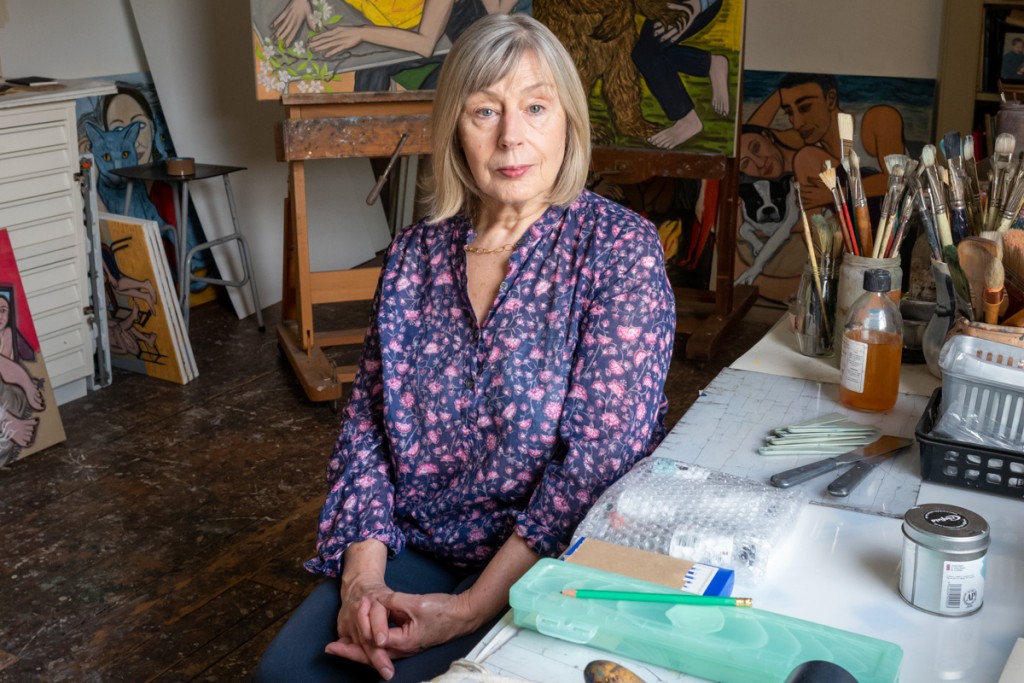
Eileen Cooper RA talks about her work and inspirations – and gives some advice to a young artist…
“Have fun, be daring, be generous. If you have a mad idea that won’t go away, then do it. Try new things, new materials, new processes.
Originally from the Peak District, Eileen Cooper RA is known for her distinctive, bold depictions of the female form. Elected a Royal Academician in 2000, and she was the first woman to be elected Keeper of the Royal Academy Schools (2010–2017) and has played a significant role in shaping contemporary British art.
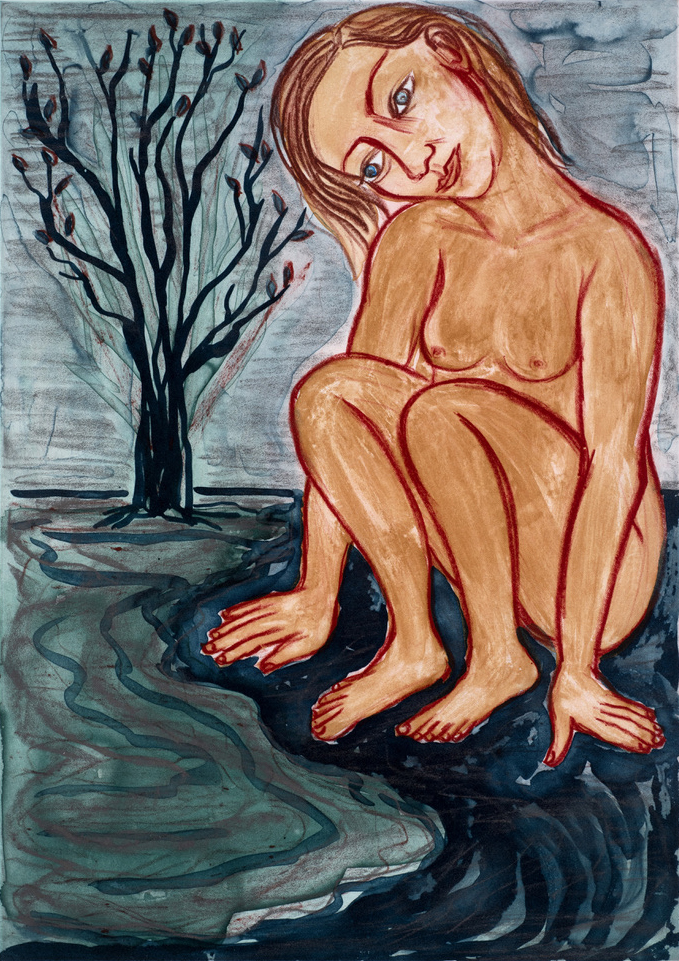
Her work, often personal and expressive, explores themes of female experience, motherhood, and mythology – and she is passionately devoted to figuration.
Cooper has exhibited widely in the UK and internationally. Her work is held in many public and private collections including the Tate Gallery, the Arts Council Collection, the British Museum, and the Royal Collection. She was made an Officer of the British Empire (OBE) for services to Art and Art Education in 2016.
She was elected an Honorary Academician of the RWA in 2022, and she frequently exhibits in the RWA Open and other major exhibitions.
For this interview, she answered questions posed by Charlotte Nixon, a 15-year-old GCSE art student who has chosen to study Cooper as part of her coursework.
When did you first realise you were an artist?
I didn’t dare call myself an artist until I’d had a few exhibitions—then I finally included ‘artist’ in my passport.
However, I think others recognised it in me from about five years old. I thank my wonderful teachers from primary school, secondary/comprehensive school, then onto a further education college, Goldsmiths College, and the Royal College of Art—all of whom encouraged and singled me out. Education changed my life, especially art education.
What inspires your work?
Life, the female body, other art, books, cartoons, the natural world—especially the earth, sky, sea. Relationships, motherhood, work, dance, sexuality, death, memory.
Also, materials and process.
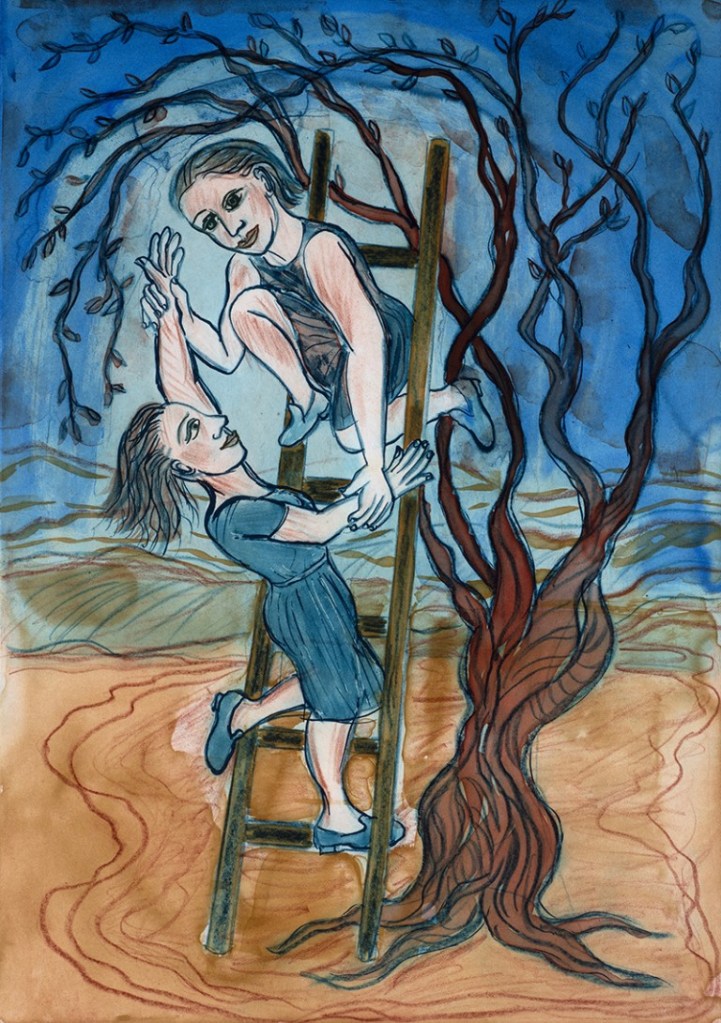
Your work often features strong, dynamic female figures. What draws you to this theme, and do you see these women as self-portraits in any way?
It’s always my starting point—the female figure. I might start with the nose or an eye, sometimes the shape of the head and shoulder, then describe the figure from there, restating and changing many times until she finds her place in the canvas and the narrative develops.
She is both personal and universal (I hope).
Do you always start with a clear idea of the finished piece, or does the piece evolve as you work?
Both. Sometimes I work from preliminary drawings, or an unresolved idea in a sketchbook, a found photo, other art, a memory, an imagining.
There’s often a gap in what I’m working on, which leaves room for something to wander in and fill the gap.
Which artists—past or present—do you admire?
Early Italian painting, Japanese prints, Indian miniatures, Titian, Van Gogh, Degas, Picasso, Frida Kahlo, Käthe Kollwitz, Max Beckmann, Henri Cartier-Bresson, Mary Cassatt, Gwen John, Alice Neel, Francesca Woodman, Paula Rego, Marlene Dumas, Helen Chadwick.
What advice would you give to a young person hoping to develop their own artistic voice?
Put in the hours. Don’t be precious with your work—always be prepared to change and develop your artwork, revisit, rework, and restate.
Have fun, be daring, be generous. If you have a mad idea that won’t go away, then do it. Try new things, new materials, new processes.
Look at other artists, look back into art history, don’t just look online—stand in front of paintings and absorb them.
Drawing from other art, photos, film, poetry is inspiring and nourishing. Look at the world around you, draw the everyday, draw movement, draw from memory. Everything for me starts with drawing.
What did becoming an Honorary Academician of the RWA mean to you?
“I was honoured, particularly as artists are elected by their peers. I love the gallery as well. I’m going to try to be more involved!”
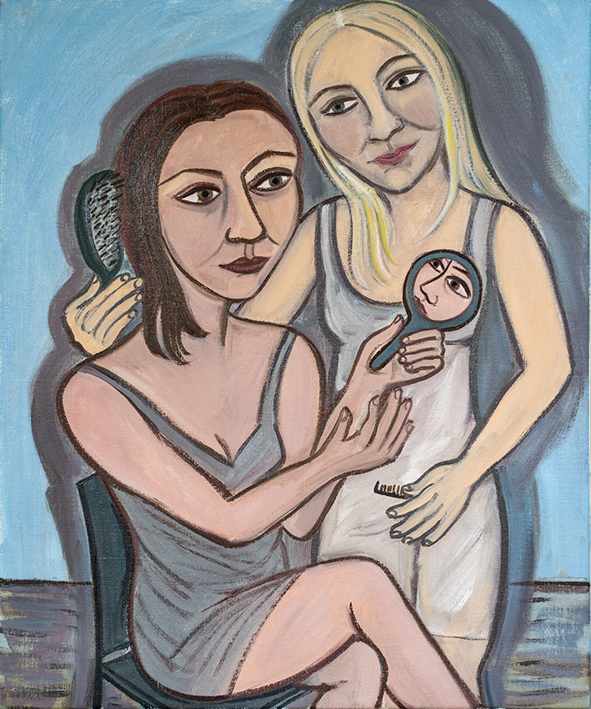
Explore more of Eileen Cooper’s work at eileencooper.co.uk.
Portrait photo top by Malcolm Southward

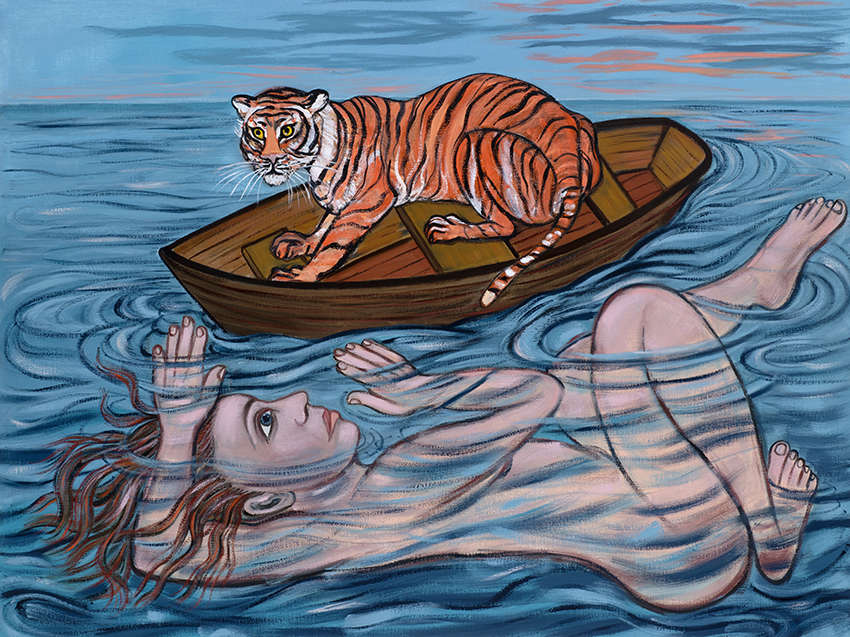
 The Floating Circle