
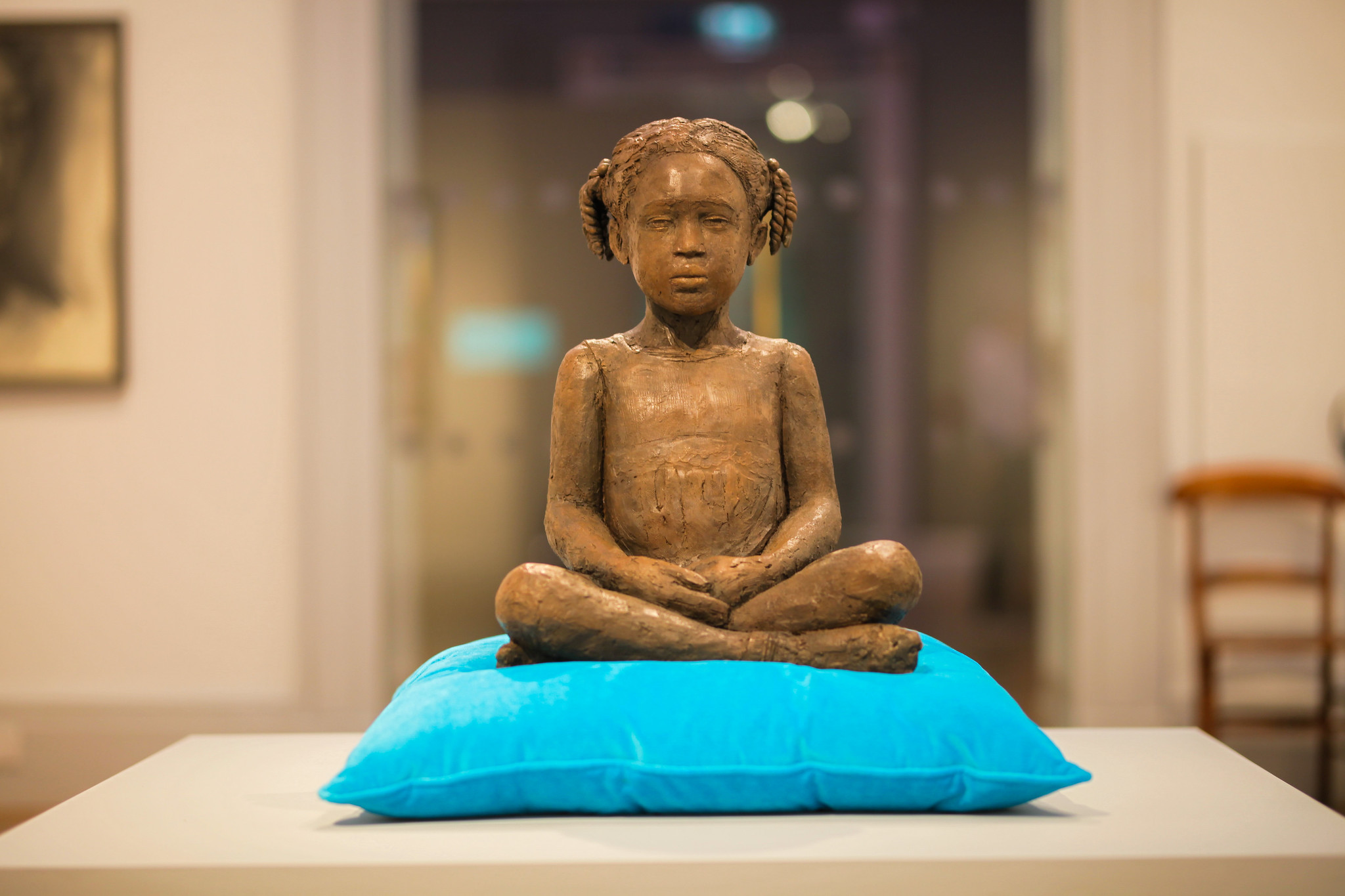
Charlotte Nixon – a Year 10 student at Trinity Academy in Bristol – visits a new exhibition by Valda Jackson at the RWA…
by Charlotte Nixon
“…A line struck me: “The absence of choice, but the presence of hope”…
When I walked into the exhibit for the first time, the sculpture of a little girl instantly caught my eye. Its solemn expression and beautiful handiwork piqued my interest. Who was she and what was her story?
The artist, Valda Jackson RWA, was born in 1959 and when she was 5 years old she moved to England from Jamaica to reunite with her parents, who had already left. ‘Miss Polly’, the little girl who appears in nearly all of the artworks, represents children like Valda Jackson, whose parents were part of the Windrush Generation and were left behind to later be ‘sent for’ to join them after some years. The pictures in the exhibit display themes of loneliness, family and childhood innocence.
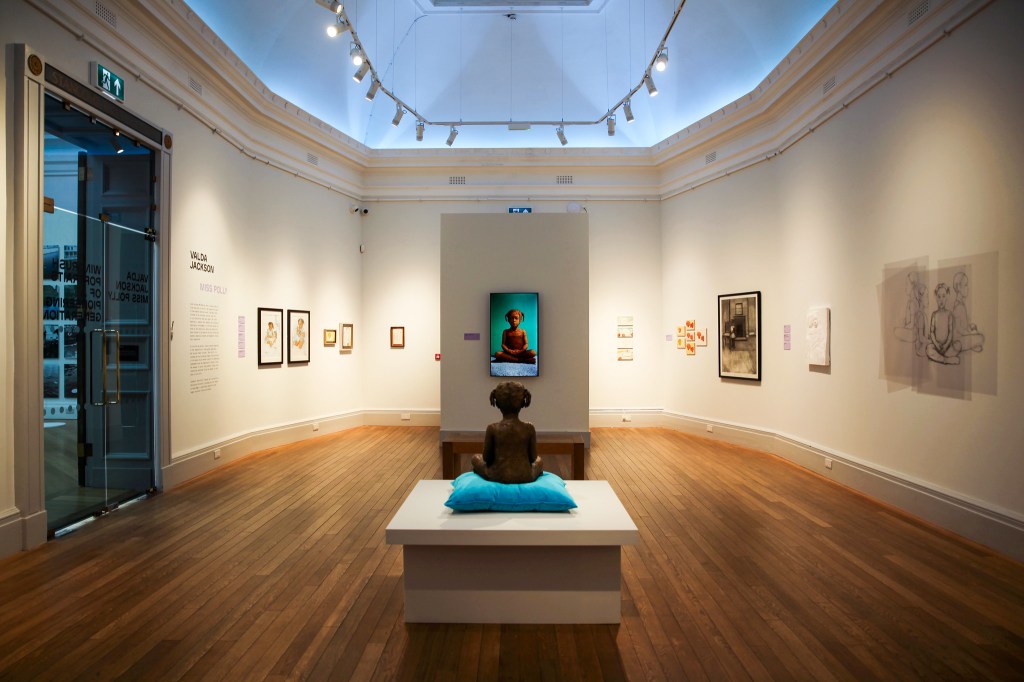
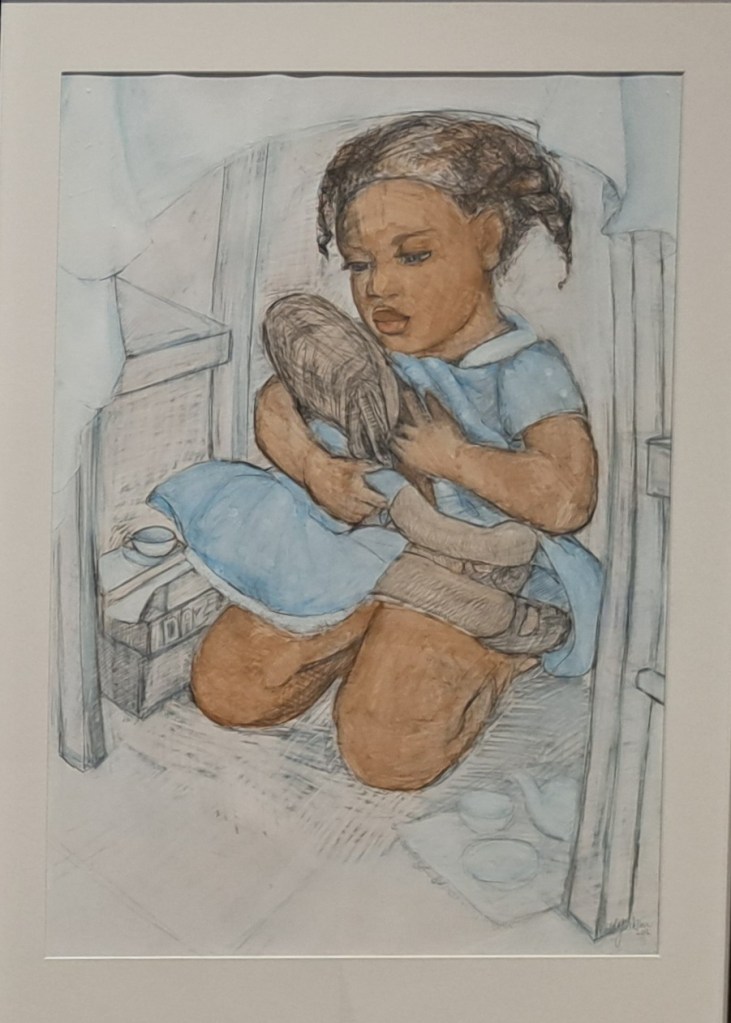
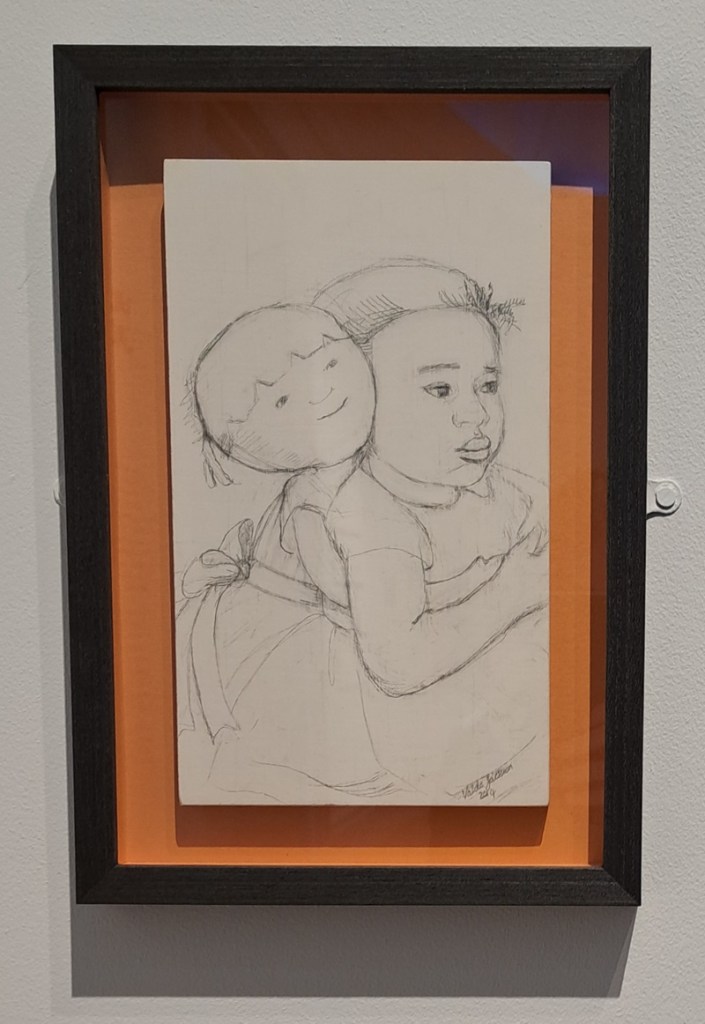
Many of the artworks include a doll named Molly who is clearly significant in the child’s life. A lot of these, particularly ones such as At home with Molly and Playing mummy shows Miss Polly taking on the role of a mother for her doll. However, My dear I wanted to have you with me shows the doll seemingly taking on the mother figure and holding Miss Polly.
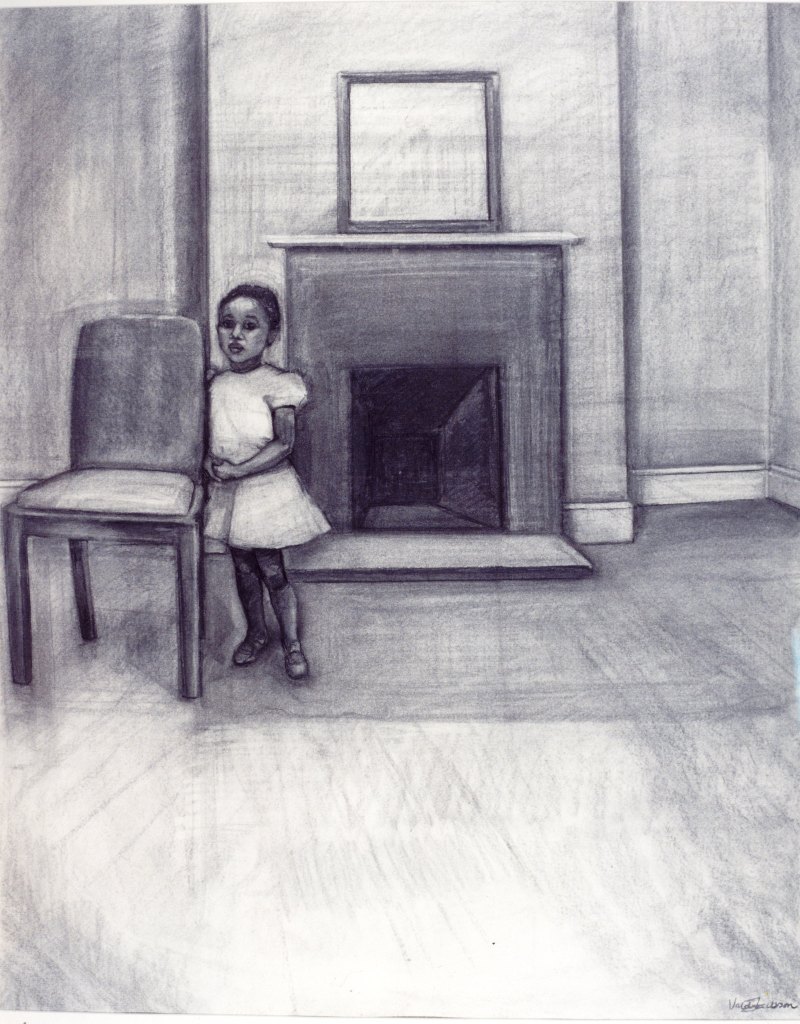
Multiple pictures portray the idea of time passing as this little girl is waiting to be reunited with her parents. The piece Waiting (2024), using plaster relief, shows 16 pictures of an empty chair, as if symbolising how long Miss Polly has been alone. Another picture with the same name Waiting (1990) depicts Miss Polly standing in an empty room with only a chair. This artwork has an overwhelmingly lonely feeling. The Film of Miss Polly shows the sculpture sitting whilst the lighting changes, again showing how she has stayed for so long, waiting.
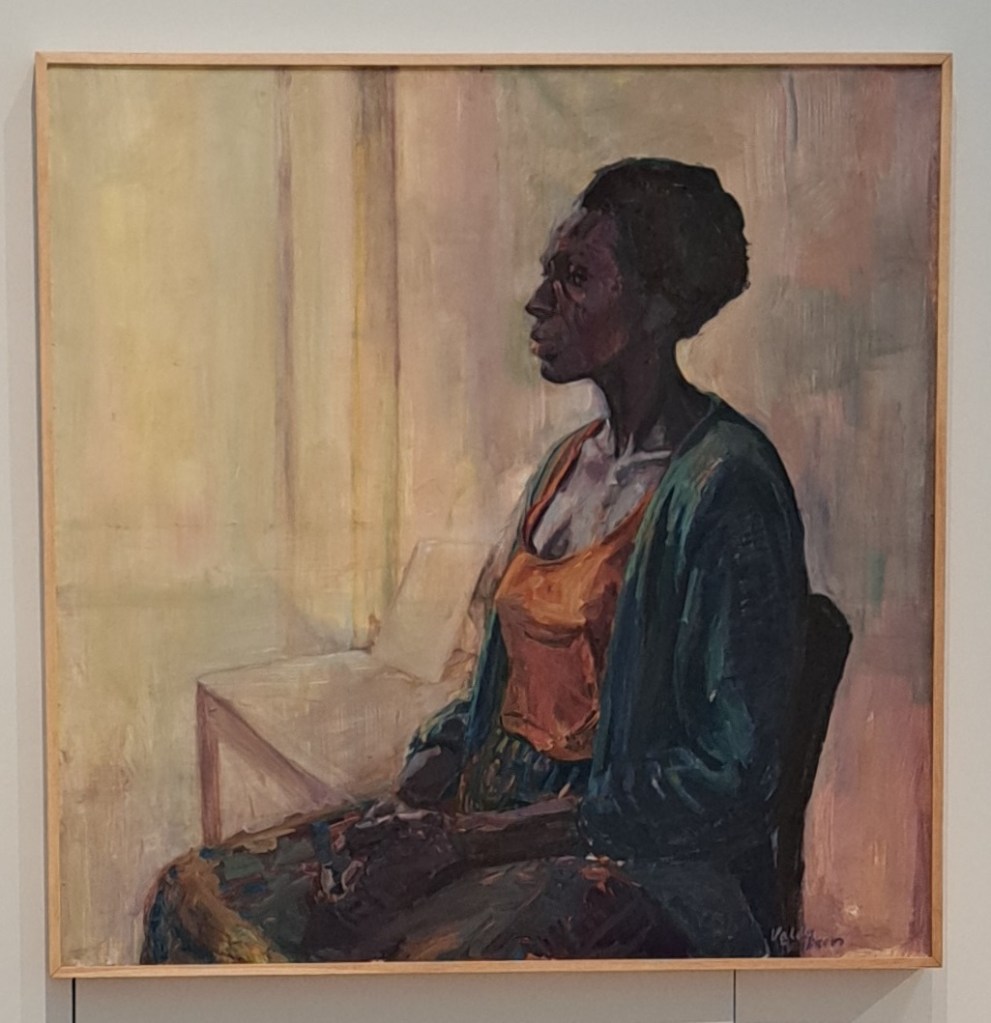
Two artworks that stand out in the exhibit are of a woman rather than a young child. One titled Seated woman (II) shows a woman sitting in a chair with a neutral expression, similar to the one Miss Polly wears in many of the artworks depicting her. This could be portraying Miss Polly’s mother waiting to be reunited with her daughter, paralleling how Miss Polly is also waiting.
The character of Miss Polly seems to symbolise Valda Jackson’s own childhood. The common appearances of dolls, tea sets and fruit creates a nostalgic feeling of childhood innocence and shows how these things from her early years have stayed with her throughout her life, also suggesting that the feelings of loneliness and experience of abandonment have continued to stay with her and still affect her.
Miss Polly speaks to anyone who has experienced separation or abandonment from their parents and family, particularly during childhood, and explores how a young child processes and copes with that experience. The exhibition description includes a line that struck me: “The absence of choice, but the presence of hope”. It’s a very fascinating and memorable exhibition and I came away with new perspectives.
Miss Polly is showing at the RWA until 11 August 2024. Free entry for Friends of the RWA. More info here.
Image top: ‘Miss Polly’ by Valda Jackson. Photo by Alice Hendy

 The Floating Circle