

Rob Campell discovers a fascinating local history of art created by German and Italian prisoners of war…
By Rob Campbell
Across the entire wall of the bar in the Fox and Hounds pub on the western edge of Dartmoor is the most curious piece of art, which I came across during a summer cycle.
You might have seen it too, or one much like it in any country pub. It’s a mural of a hunting scene: red-coated figures on horseback with hounds in pursuit, and the hills of what look like Devon in the background. It’s well-lit, and a talking point for hikers and bikers visiting the pub on the A386 road a few miles from Lydford.
What’s curious is that it was painted in 1947 by an artist called Willie Brandt (not the not the future German chancellor of the same name) who didn’t ask to be on Dartmoor at all. Willie was a German prisoner of war at the camp at nearby Bridestowe and, according to a local history site , he painted the scene just because Adolf Hitler hated hunting. The work is part of a scattered legacy of PoW art around the West of England.
The art of PoWs is naturally better known in the UK through its flip side, through artists of the British and Commonwealth forces held prisoner abroad. One of the best known is Jack Chalker, who drew and painted scenes from his own incarceration in Japanese camps. After the war became principal of the Falmouth School of Art, and principal of the West of England College of Art in Bristol. His work of all kinds is held in, amongst other places, the RWA collection and the National Army Museum.
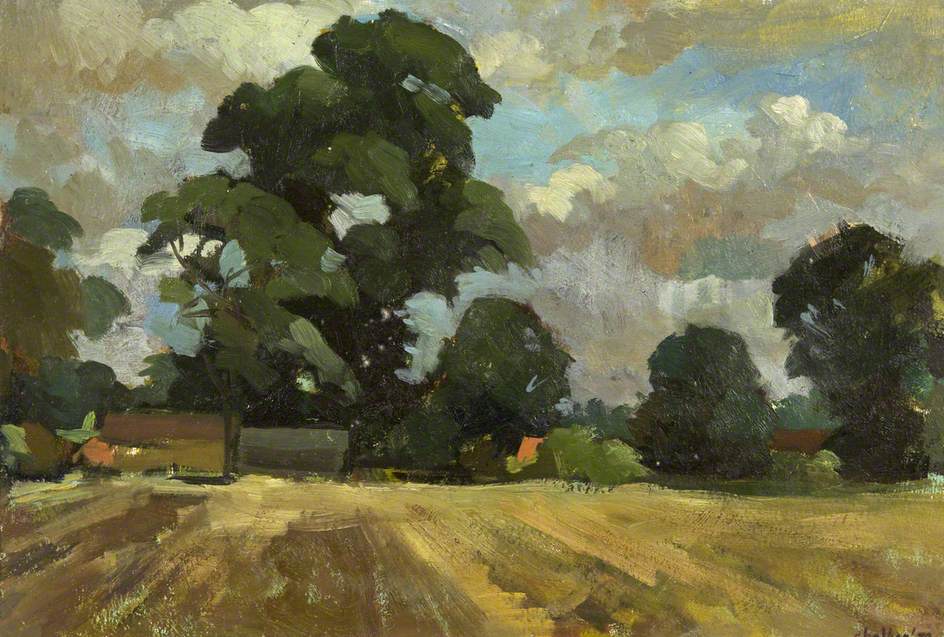
But among around 400,000 mostly German and Italian prisoners held at camps around the UK during World War Two were also men with the skills and the urge to create art. It’s another part of the story of war, defeat, capture, and being far from home.
There is, for example, beside the busy A39 on the approach to Wells from Bath, the 12 foot high sculpture of two babies suckling by a she-wolf; Romulus and Remus, the legendary founders of Rome.
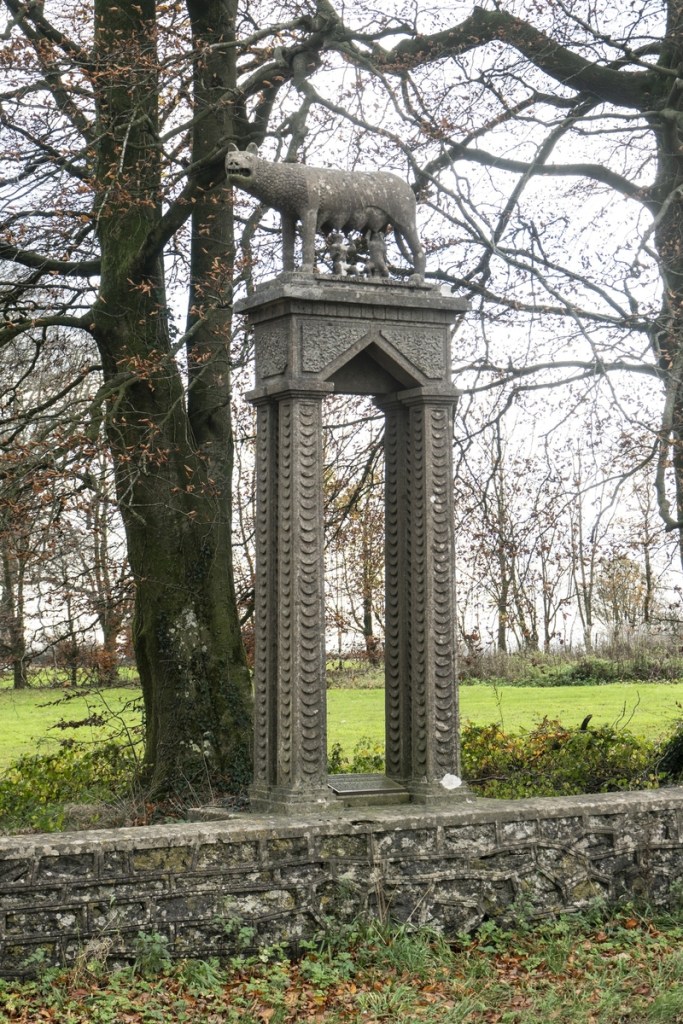
The plaque that accompanies the monument tells us the artist was Italian prisoner and stonemason Gaetano Celestra, held at a local camp but, like many, allowed out to work on local farms. Celestra made the monument in his spare time as a thank you to the kindness of the local people. It is believed that he stayed on for a while after the war, working for a local builder. The final PoWs in the UK were freed in 1948 but at least 25,000 Germans chose to stay and live in the UK.
Some of the other prison camp art in the region speaks more directly of longing and separation. In the Wiltshire Museum at Devizes, for example, is a 56-page booklet in rhyming German chronicling the daily life in the nearby Le Marchant Camp, illustrated with beautiful watercolours. The images within it range from humorous to tender: there’s one of the artist waving at his young wife back home in Germany, and another of him looking up at planes that could take him the two hours to home.
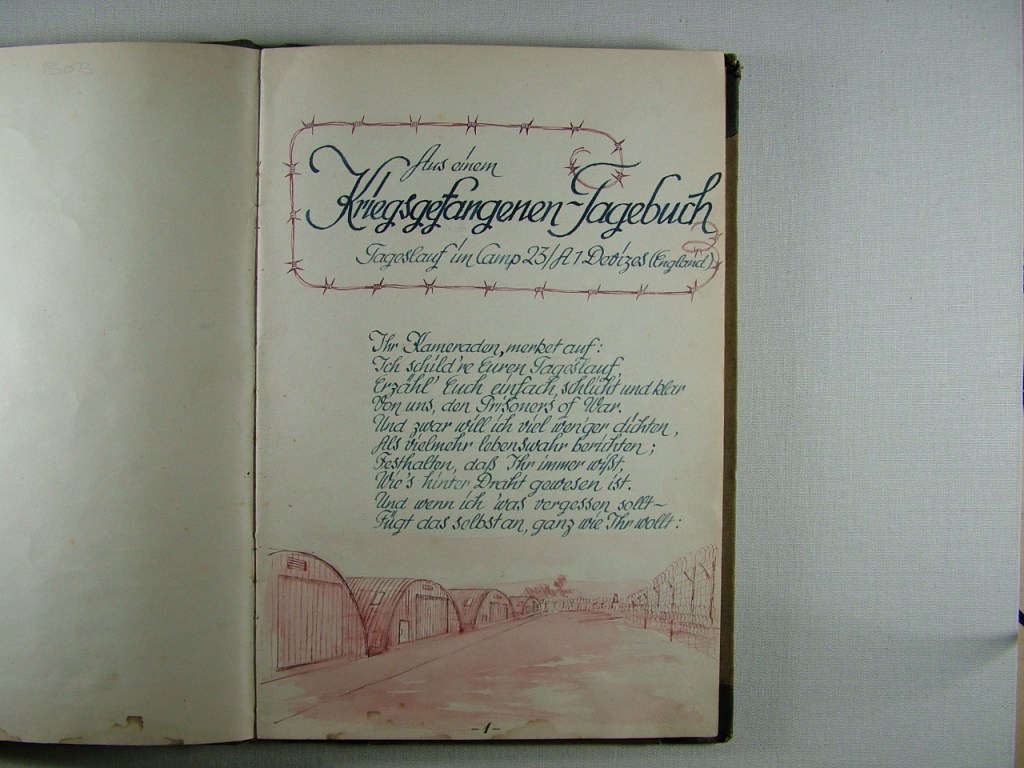
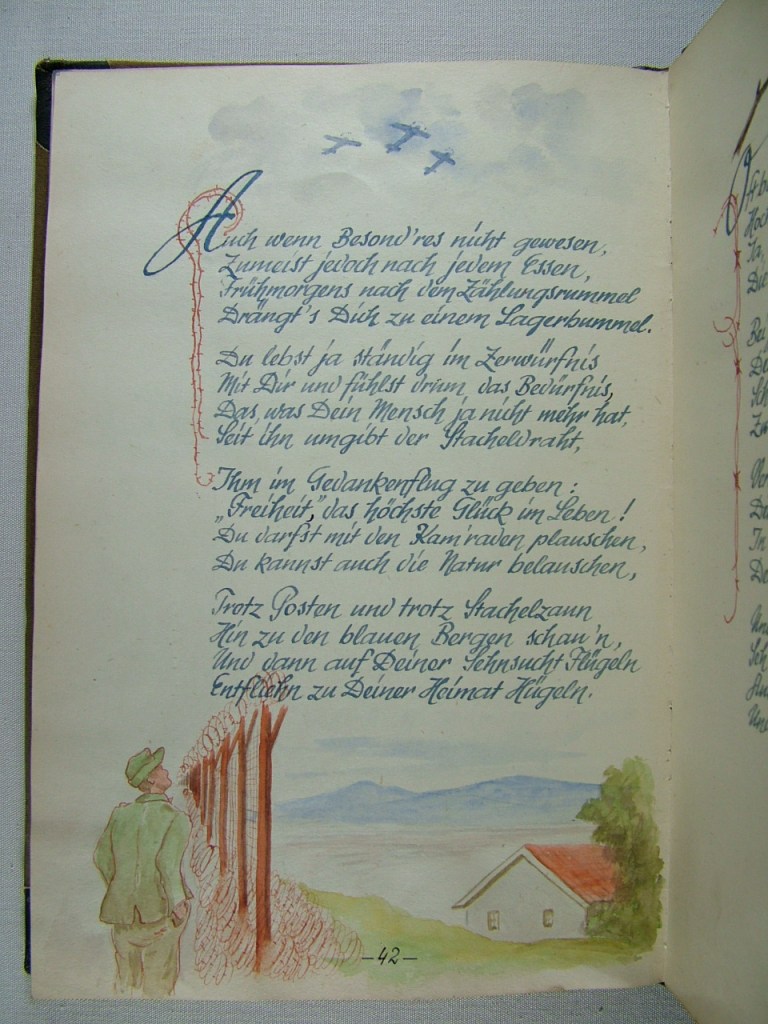
The museum has a remarkable video story of how they tracked down the artist and, in conversation with his family, found that he returned to Germany and became a civil servant and father to two children before dying in 1984 at the age of 87. The artist had always wanted to go to art school, but his father insisted he get a steadier job.
Elsewhere in Wiltshire, in the village of Easton Grey near the boundary with Gloucestershire and a few miles from Malmesbury, other Italian PoWs made their mark in art, by turning their hut into a chapel with an exquisitely-painted ceiling.
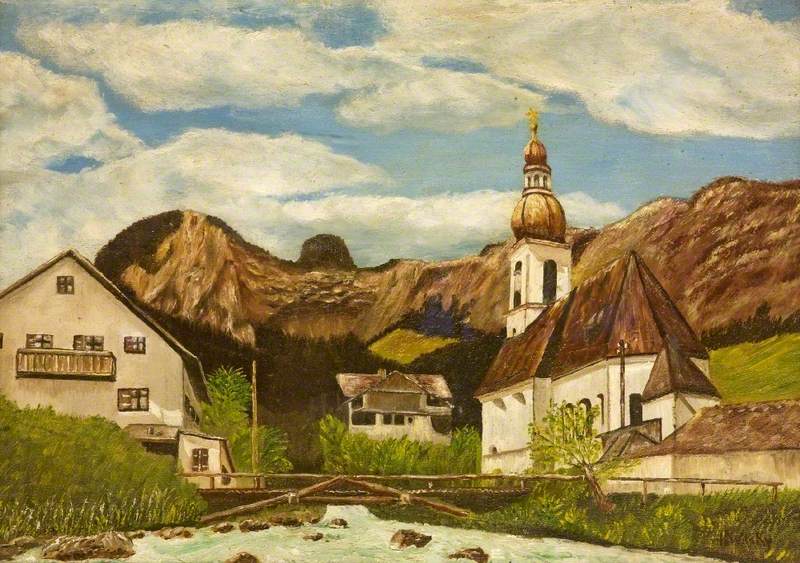
But perhaps the most moving of these fragments found around our countryside is the oil-on-canvas painting at the Kingswood Heritage Museum. It shows a verdant valley with a full river crossed by a simple wooden bridge; a handsome alpine house with a steep-pitched roof and a balcony; a church with the onion-shaped dome far more common in Bavaria than in Britain; and mountains in the near distance. It is called, simply, Prisoner of War’s Painting of His Home in Germany and is undated. The artist is not named, so all we can is that they missed their home so much they had to paint it.
Rob Campbell is a freelance writer and editor. View his website here.

 The Floating Circle